 Driving Mastery
Road signs
UK speed limit signs explained: national, minimum, and camera zones
A clear guide to UK speed limit signs — maximum limits, the national speed limit sign, minimum speed signs, and speed camera zones — with memory hooks and free practice.
Practise road signsQuick answer
- A white circle with a red border and a number shows the maximum speed limit in mph.
- The white circle with a black diagonal stripe means national speed limits apply — not that there is no limit.
- Blue circular signs with a number show a minimum speed limit, the rarer opposite of a maximum.
- Camera zone signs warn that speed is being enforced, but do not themselves set a limit.
Speed limit signs look simple, but the family has more members than most learners expect — and a couple of persistent myths sit right in the middle of it. This guide covers the maximum limit signs, the national speed limit sign, the less common minimum speed signs, and the camera and enforcement signs that often get lumped in with them.
Maximum speed limit signs
Maximum speed limit of 30 miles per hour
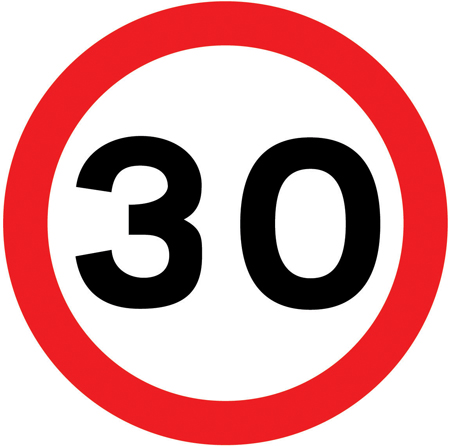
This is the most common speed sign family: 20, 30, 40, 50, and 60 all use the same design — a white circle, red border, black number. The number is always the maximum you may travel at in good conditions, not a target. Once you can recognise the shape, only the number changes.
Where a 30mph limit starts and ends
Start of a 30mph limit at a town or village boundary
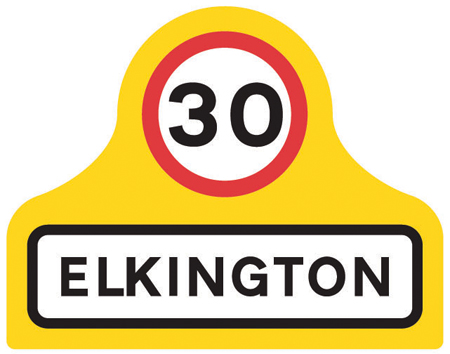
Start of a 30 miles per hour speed limit at the boundary of a town or village, explained
Built-up areas often mark the start of their 30mph limit with a place-name sign like this one, rather than a plain circle. The limit then applies until a sign tells you otherwise — usually the national speed limit sign discussed next.
The national speed limit sign — the classic myth
National speed limits apply
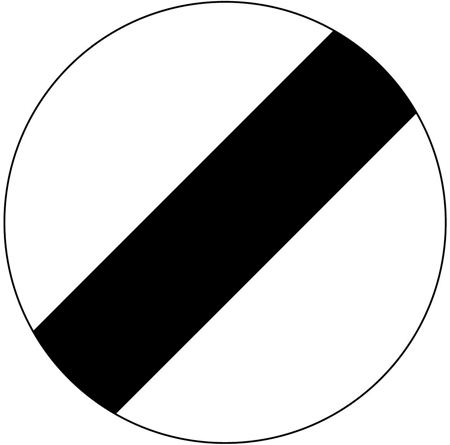
This is the sign learners most often misread. The plain diagonal stripe does not mean 'no speed limit' — it means the national speed limit for your road type and vehicle now applies. For a car, that is typically 60 mph on a single carriageway and 70 mph on a dual carriageway or motorway. Vans and larger vehicles have their own, usually lower, national limits.
Memory hook: the diagonal means national, never no limit.
Minimum speed limit signs — the rarer opposite
Minimum speed limit of 30 miles per hour
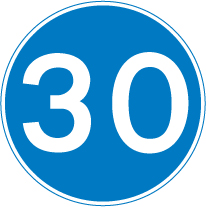
Swap the colour and the meaning flips. A plain blue circle with a number sets a minimum speed limit — you must not travel slower than the number shown unless it is impracticable or unsafe to comply, which is how Know Your Traffic Signs words the exception. The same blue circle with a red diagonal line through it means the opposite: the minimum speed limit has ended. From instructor experience, the places you actually meet one are tunnels and fast sections where slow-moving traffic would be dangerous — that is an observation rather than a rule about where they must be used. It is easy to glance at this sign and read it as another maximum limit, simply because most number-in-a-circle signs are.
Memory hook: red circle caps your speed from above; blue circle sets a floor underneath it.
20mph zones and their entry and exit signs
Entrance to a 20 miles per hour speed limit zone
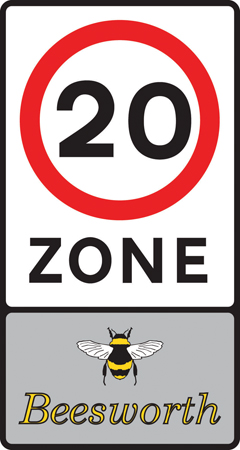
A '20mph zone' is different from a single 20mph sign — the zone version usually appears with traffic-calming features and applies across a wider area until an end-of-zone sign is reached, rather than being tied to one stretch of road.
Speed camera and enforcement signs
Speed camera ahead and reminder of 30mph limit
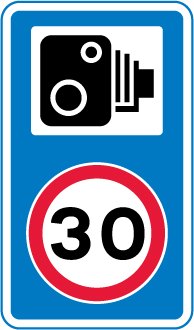
Speed camera ahead and reminder of 30 miles per hour speed limit, explained
Area in which cameras are used to enforce the speed limit
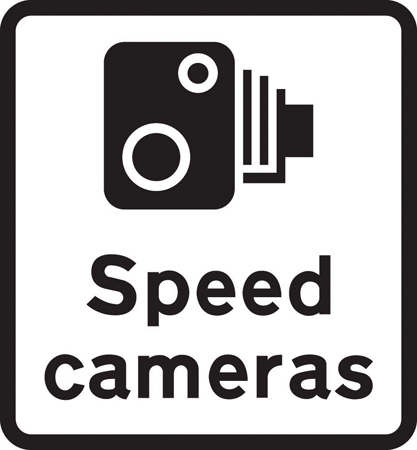
Area in which cameras are used to enforce the speed limit regulations, explained
Camera signs are easy to mistake for a new speed limit because they often show a number — but the number is a reminder of the limit already in force, not a separate rule. The actual limit still comes from the nearest maximum-speed circle or the national speed limit sign.
Memory hook: camera signs remind you of a limit, they don't set a new one.
Frequently asked questions
Does the national speed limit sign mean there is no speed limit?
No. The white circle with a black diagonal stripe means national speed limits apply for your road type and vehicle — for a car, typically 60 mph on single carriageways and 70 mph on dual carriageways and motorways, not an unlimited speed.
What does a blue speed sign mean?
A plain blue circular sign with a number sets a minimum speed limit — you must not drive slower than the number shown unless it is impracticable or unsafe to comply. The same blue circle with a red diagonal line through it is the end sign: the minimum speed limit no longer applies. This is the rarer opposite of the more common red-ringed maximum speed signs.
Do speed camera signs set their own speed limit?
No. Camera signs warn that speed enforcement is in place and often remind you of the limit already set by a nearby maximum-speed sign or the national speed limit sign. They do not introduce a separate limit.
What is the difference between a 20mph sign and a 20mph zone?
A single 20mph sign applies to that stretch of road. A 20mph zone, marked by an entry sign often paired with traffic-calming measures, applies across a wider area until an end-of-zone sign is reached.
Related learning
Part of a topic guide
Road signs for learner drivers
Part of Driving Mastery's road-signs guide helping UK learner drivers recognise, understand, and practise the signs that matter for theory preparation and real driving.
Top 10 UK road signs learners get wrong (and how to remember them)
Ten road signs UK learners often mix up, why each one causes confusion, and simple memory hooks to keep them straight before your theory test.
Road sign shapes and colours explained: the system behind UK signs
UK road signs follow a simple design system. Learn what triangles, circles, and rectangles mean, what the colours do, and the famous exceptions.
Warning road signs explained: junctions, bends, narrowing roads and hazards
Learn how UK warning signs work, including junction warnings, bends, narrowing roads, steep hills, pedestrian warnings and animal signs.
Regulatory road signs explained: red circles, blue circles, STOP and give way
Understand UK regulatory road signs: prohibitions, mandatory instructions, STOP, give way, turn bans, no entry and priority signs.
Level crossing signs and signals explained
A clear guide to UK level crossing signs — gated and non-gated crossings, warning lights, and the stop-and-telephone signs learners often misread.
Practise speed limit signs free
Test how quickly you can tell maximum, minimum, and national speed limit signs apart, plus the camera signs that often get confused with them.
Practise road signs freeTry a mock test with sign questions
Driving Mastery's mock tests include image-based sign questions, including several speed limit signs covered in this guide.
Start a mock testDriving Mastery's learner guidance is written and reviewed by Niall Cullen, a UK approved driving instructor, so it stays practical, safe, and grounded in real driving lessons.