 Driving Mastery
Road signs
Road sign shapes and colours explained: the system behind UK signs
UK road signs follow a simple design system. Learn what triangles, circles, and rectangles mean, what the colours do, and the famous exceptions.
Practise road signsQuick answer
- Triangles warn you about something ahead.
- Circles give orders: red rings prohibit, blue circles instruct.
- Rectangles give information and directions.
- Key exceptions exist so critical signs are recognisable even when damaged — STOP is the only octagon, and give way is the only downward-pointing triangle.
UK road signs look like hundreds of separate facts to memorise. They are not. Nearly all of them are built from one small design system, and once you can read it, you can work out signs you have never seen before — in the theory test and on real roads. This guide explains the system, then the famous exceptions.
Triangles warn
Roundabout ahead
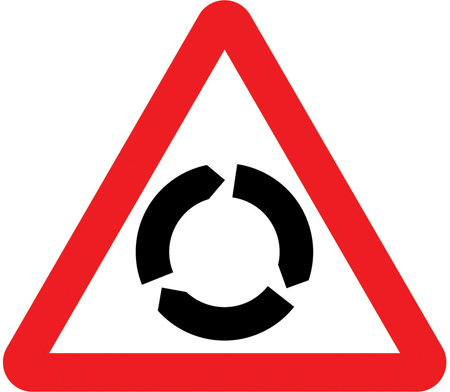
A red-bordered triangle pointing upwards is always a warning about something ahead: a bend, a junction, a crossing, a hazard. It never gives an order — it prepares you to make a decision. When you see a triangle in a theory question, ask: what is this telling me to expect?
Circles give orders
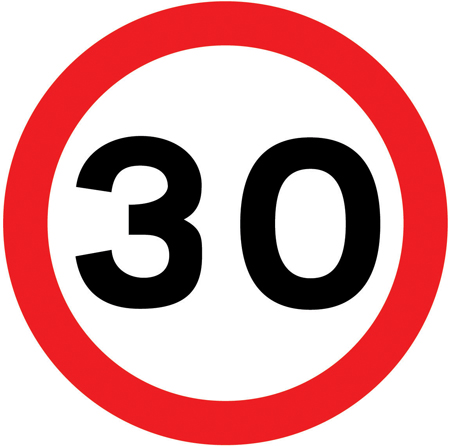
Circular signs are commands, and the colour tells you which kind. A red ring prohibits: whatever is pictured inside it is not allowed — no overtaking, no entry, no motor vehicles. A blue circle instructs positively: you must do, or may only do, what it shows — turn left, mini-roundabout, route for cycles only.
Maximum speed limit of 30 miles per hour
Route for use by pedal cycles only
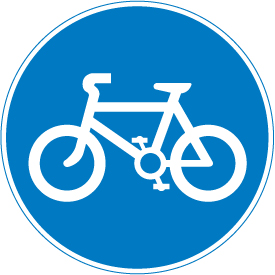
This single rule — red ring bans, blue circle instructs — resolves an enormous number of theory questions on its own, including most of the signs learners commonly confuse.
Rectangles inform
Rectangular signs give information and directions rather than warnings or orders: distances, lane guidance, route confirmation, and facilities. Their background colour signals the road type — blue for motorways, green for primary routes, white for local routes — which is itself a regular theory question.
The famous exceptions — and why they exist
Stop and give way
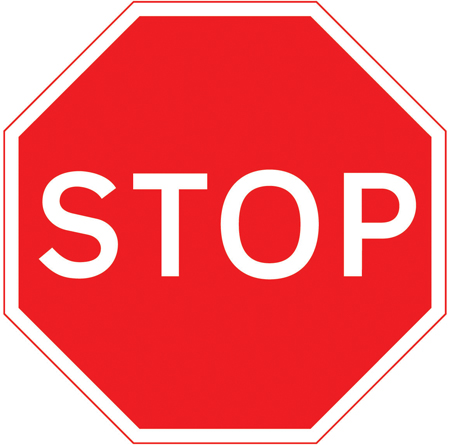
Give way to traffic on the major road
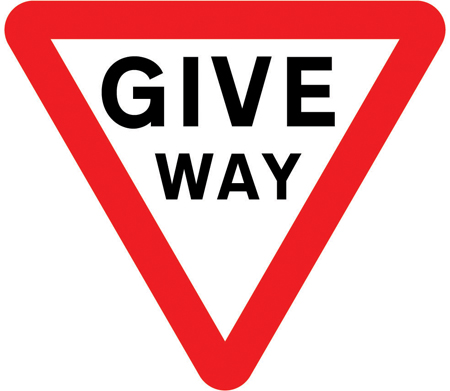
Two junction signs deliberately break the shape rules. STOP is the only octagon, and give way is the only triangle that points downwards. The reason is a favourite theory-test detail: these signs are so safety-critical that they must be identifiable by outline alone — even if the face is obscured by snow, dirt, or damage, the shape still tells you what to do.
A third one to know: the national speed limit sign is a plain white circle with a black diagonal — a circle giving an order, but without the red ring. It means national limits apply for your road and vehicle, never 'no limit'.
Using the system in your theory test
-
Classify the shape first
Before reading any detail, decide: warning, order, or information? That usually eliminates half the answer options.
-
Check the colour second
Red ring means prohibited; blue circle means instructed. Now the symbol tells you what is banned or required.
-
Read plates as part of the sign
Panels underneath change or limit the meaning — times, distances, exceptions. A sign plus plate is one message, not two.
-
Drill the exceptions
STOP, give way, and the national speed limit sign break the pattern on purpose. Learn them as their own tiny group.
Frequently asked questions
What do the shapes of UK road signs mean?
Triangles warn about hazards ahead, circles give orders, and rectangles give information and directions. Red rings prohibit what they picture, while blue circles give positive instructions.
Why is the STOP sign octagonal?
STOP is the only octagonal road sign in the UK so it can be recognised by its outline alone, even if the face of the sign is obscured by snow, dirt, or damage. Give way is the only downward-pointing triangle for the same reason.
What do the colours on direction signs mean?
Blue backgrounds are used on motorway signs, green on primary routes, and white on local routes. Brown signs point to tourist attractions.
Related learning
Part of a topic guide
Road signs for learner drivers
Part of Driving Mastery's road-signs guide helping UK learner drivers recognise, understand, and practise the signs that matter for theory preparation and real driving.
Top 10 UK road signs learners get wrong (and how to remember them)
Ten road signs UK learners often mix up, why each one causes confusion, and simple memory hooks to keep them straight before your theory test.
Warning road signs explained: junctions, bends, narrowing roads and hazards
Learn how UK warning signs work, including junction warnings, bends, narrowing roads, steep hills, pedestrian warnings and animal signs.
Regulatory road signs explained: red circles, blue circles, STOP and give way
Understand UK regulatory road signs: prohibitions, mandatory instructions, STOP, give way, turn bans, no entry and priority signs.
UK speed limit signs explained: national, minimum, and camera zones
A clear guide to UK speed limit signs — maximum limits, the national speed limit sign, minimum speed signs, and speed camera zones — with memory hooks and free practice.
Level crossing signs and signals explained
A clear guide to UK level crossing signs — gated and non-gated crossings, warning lights, and the stop-and-telephone signs learners often misread.
Practise sign recognition free
Use Driving Mastery's road-signs practice to turn the shape system into fast recognition — it tracks the signs you miss so you can close the gaps.
Practise road signs freeSee the signs learners get wrong
Now you can read the system, test it against the ten signs learners most often mix up — with memory hooks for each.
Read the top 10 guideDriving Mastery's learner guidance is written and reviewed by Niall Cullen, a UK approved driving instructor, so it stays practical, safe, and grounded in real driving lessons.