 Driving Mastery
Road signs
Regulatory road signs explained: red circles, blue circles, STOP and give way
Understand UK regulatory road signs: prohibitions, mandatory instructions, STOP, give way, turn bans, no entry and priority signs.
Practise road signsQuick answer
- Regulatory signs tell you what you must or must not do.
- Most regulatory signs are circular.
- A red ring or red circle indicates a prohibition.
- A blue circle usually gives a positive mandatory instruction or a route for a particular class of traffic.
Regulatory signs are the signs that control behaviour. They are not just warning you; they are telling you what the rule is at that point in the road. If warning triangles mean 'prepare', regulatory signs mean 'obey'.
Red circles prohibit
No entry for vehicular traffic
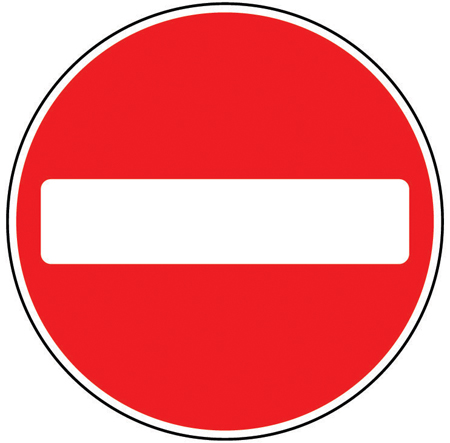
A red ring or red circle indicates a prohibition. The symbol or wording tells you what is banned: no entry, no motor vehicles, no overtaking, no left turn, no right turn, no U-turn, no cycling, weight limits, width limits, or a maximum speed.
No U-turns for vehicular traffic
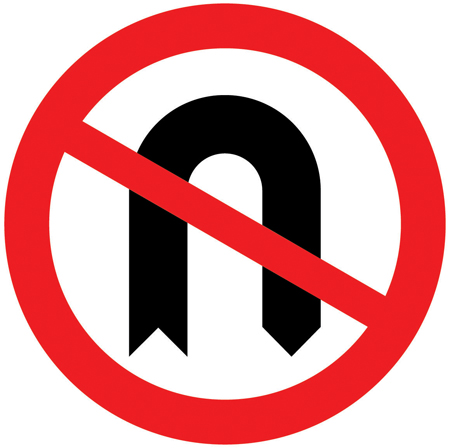
For turn bans, look for the extra red bar across the symbol. GOV.UK's regulatory-sign guidance uses this rule for prohibited changes of direction such as no U-turn, no right turn and no left turn.
Blue circles instruct
Turn left ahead
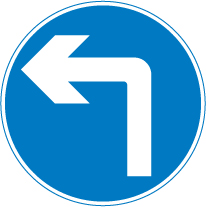
Vehicular traffic must turn ahead in the direction indicated by the arrow, explained
Blue circles usually tell you what you must do, or what route is reserved for a particular class of traffic. Examples include turn left, keep left, pass either side to reach the same destination, mini-roundabout, and routes for cycles only.
Mini-roundabout
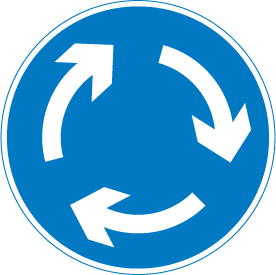
Mini-roundabout - give way to vehicles from the immediate right, explained
STOP and give way are special cases
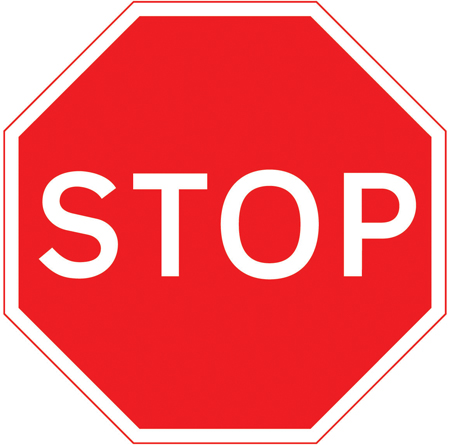
Stop before crossing the line
Give way to traffic on the major road
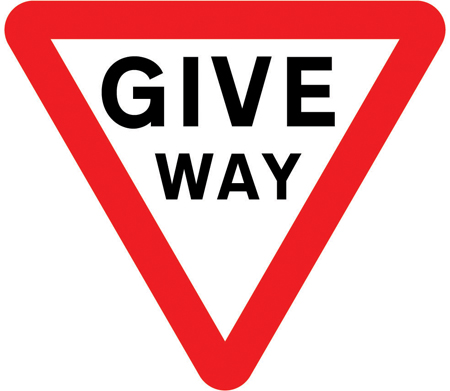
STOP and give way are regulatory signs even though they do not follow the normal circular shape. STOP means you must stop before crossing the transverse line and ensure the way is clear before entering the major road. Give way means you must give way to traffic on the major road.
Priority and direction signs
Give priority to vehicles from the opposite direction
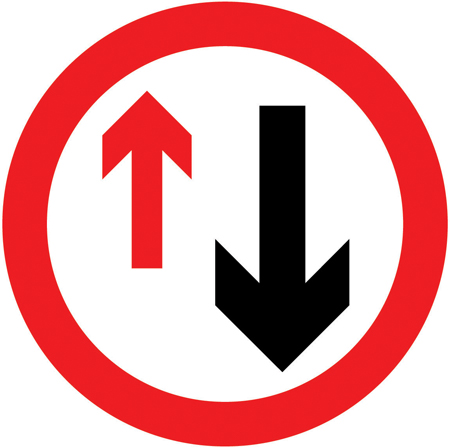
Priority must be given to vehicles from the opposite direction, explained
Priority signs are a common learner trap because the arrows look similar to information signs. The red-ring version gives an order: you must give priority to vehicles from the opposite direction. The blue rectangular version, covered in the top-10 signs article, tells you your direction has priority.
Plates can change the rule
A plate underneath a regulatory sign can limit when it applies, who is exempt, or where the restriction begins. For example, a turn ban may apply only at certain times, or a no-vehicles sign may include an access exception. In revision, read the sign and the plate as one complete instruction.
How to answer regulatory-sign questions
-
Ask whether it is an order
If the sign is circular, it is probably telling you what must or must not happen.
-
Use the colour
Red ring means prohibited. Blue circle means instructed or reserved for a class of traffic.
-
Read the symbol
The symbol tells you what the order applies to: vehicles, cycles, overtaking, turning, speed, width, weight, or route.
-
Check for exceptions
A plate may add times, exemptions, access rules, or distance. Do not answer from the top sign alone if a plate is shown.
Frequently asked questions
What are regulatory road signs?
Regulatory signs tell road users what they must or must not do. Most are circular, with red rings showing prohibitions and blue circles showing positive mandatory instructions.
What does a red circle road sign mean?
A red ring or red circle indicates a prohibition. The symbol or wording tells you what is not allowed, such as no entry, no overtaking, no U-turn, no cycling, or a maximum speed limit.
What does a blue circle road sign mean?
A blue circle usually gives a positive mandatory instruction, such as turn left, keep left, or use a route reserved for a particular class of traffic such as cycles.
Related learning
Part of a topic guide
Road signs for learner drivers
Part of Driving Mastery's road-signs guide helping UK learner drivers recognise, understand, and practise the signs that matter for theory preparation and real driving.
Top 10 UK road signs learners get wrong (and how to remember them)
Ten road signs UK learners often mix up, why each one causes confusion, and simple memory hooks to keep them straight before your theory test.
Road sign shapes and colours explained: the system behind UK signs
UK road signs follow a simple design system. Learn what triangles, circles, and rectangles mean, what the colours do, and the famous exceptions.
Warning road signs explained: junctions, bends, narrowing roads and hazards
Learn how UK warning signs work, including junction warnings, bends, narrowing roads, steep hills, pedestrian warnings and animal signs.
UK speed limit signs explained: national, minimum, and camera zones
A clear guide to UK speed limit signs — maximum limits, the national speed limit sign, minimum speed signs, and speed camera zones — with memory hooks and free practice.
Level crossing signs and signals explained
A clear guide to UK level crossing signs — gated and non-gated crossings, warning lights, and the stop-and-telephone signs learners often misread.
Test regulatory signs free
Practise red-circle and blue-circle signs until you can spot the order before reading the answer options.
Practise road signs freeReview the signs learners get wrong
Many common sign mistakes are regulatory-sign mistakes. Use the top-10 guide to test the rules against real learner traps.
Read the top 10 guideDriving Mastery's learner guidance is written and reviewed by Niall Cullen, a UK approved driving instructor, so it stays practical, safe, and grounded in real driving lessons.