This video has no narration.
Practical test
Why it matters
This checks planning and judgement across two separate traffic streams, where getting either half wrong leaves you exposed.
What to look out for
Check the reservation's size first
Before committing, judge whether the space is long enough to hold your whole car - if it isn't, treat the crossing as one continuous manoeuvre across both carriageways instead.
Two carriageways, two decisions
Look at the first carriageway as one gap decision. Pause, then treat the second carriageway as a fresh one before you finish the turn.
Key steps
- 1 Check mirrors, signal, and begin slowing in good time before you turn into the central reservation.
- 2 Turn smoothly and position the car correctly within the reservation space, ready to pause there if needed.
- 3 Stop and reassess the second carriageway as a completely new decision, separate from the first one you just crossed.
- 4 Once you join the new carriageway, move into the left lane and build speed smoothly with the traffic already there.
Read moreShow less
Common mistakes
Treating both carriageways as one gap
Judge each stream of traffic separately, and be ready to pause in the reservation if that's the safer option.
Stopping where the car doesn't fit
Only use the reservation space if your whole car can wait there without any part sitting in a live lane.
Example scenarios
Illustrative, AI-generated examples - not real photographs.
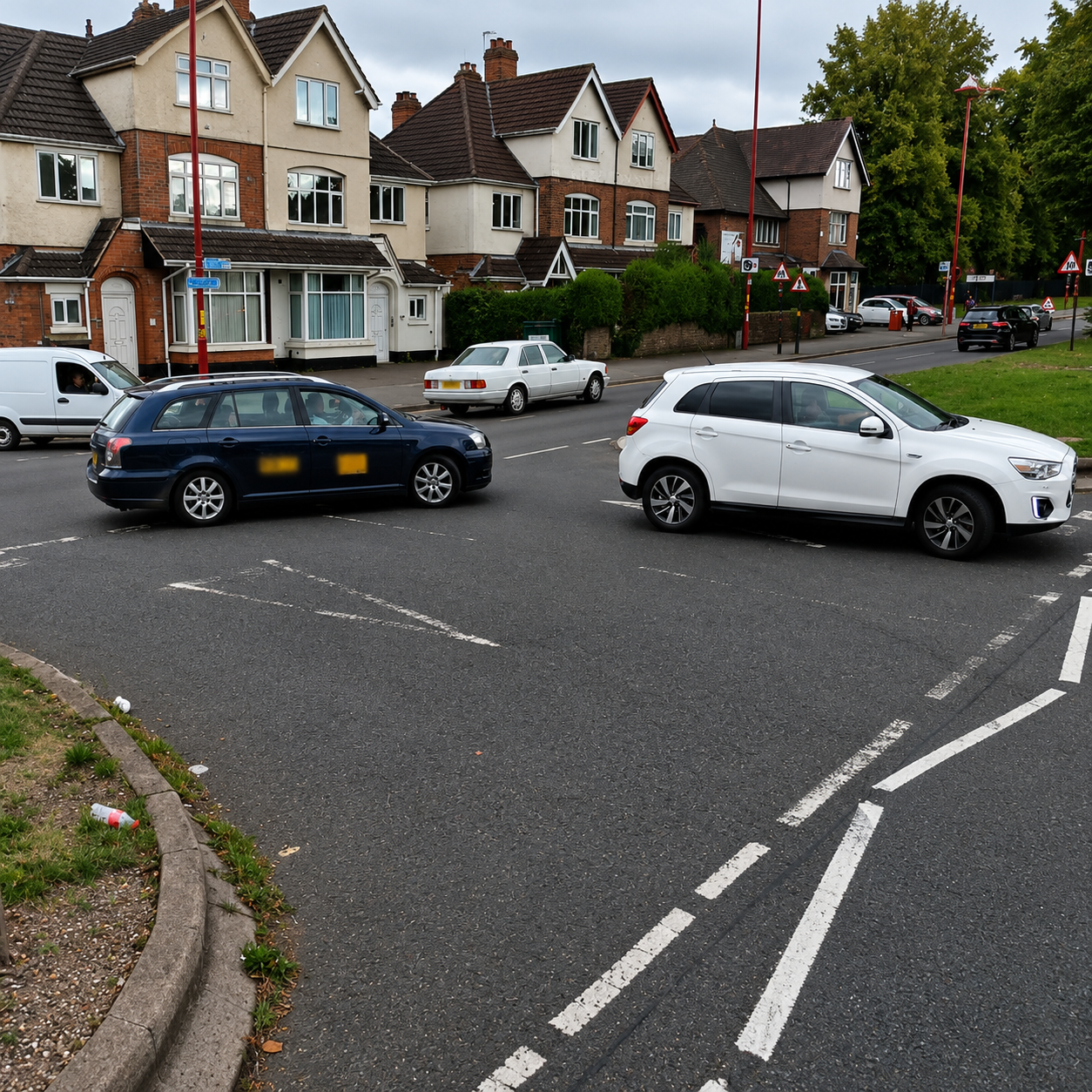 Avoid
Avoid
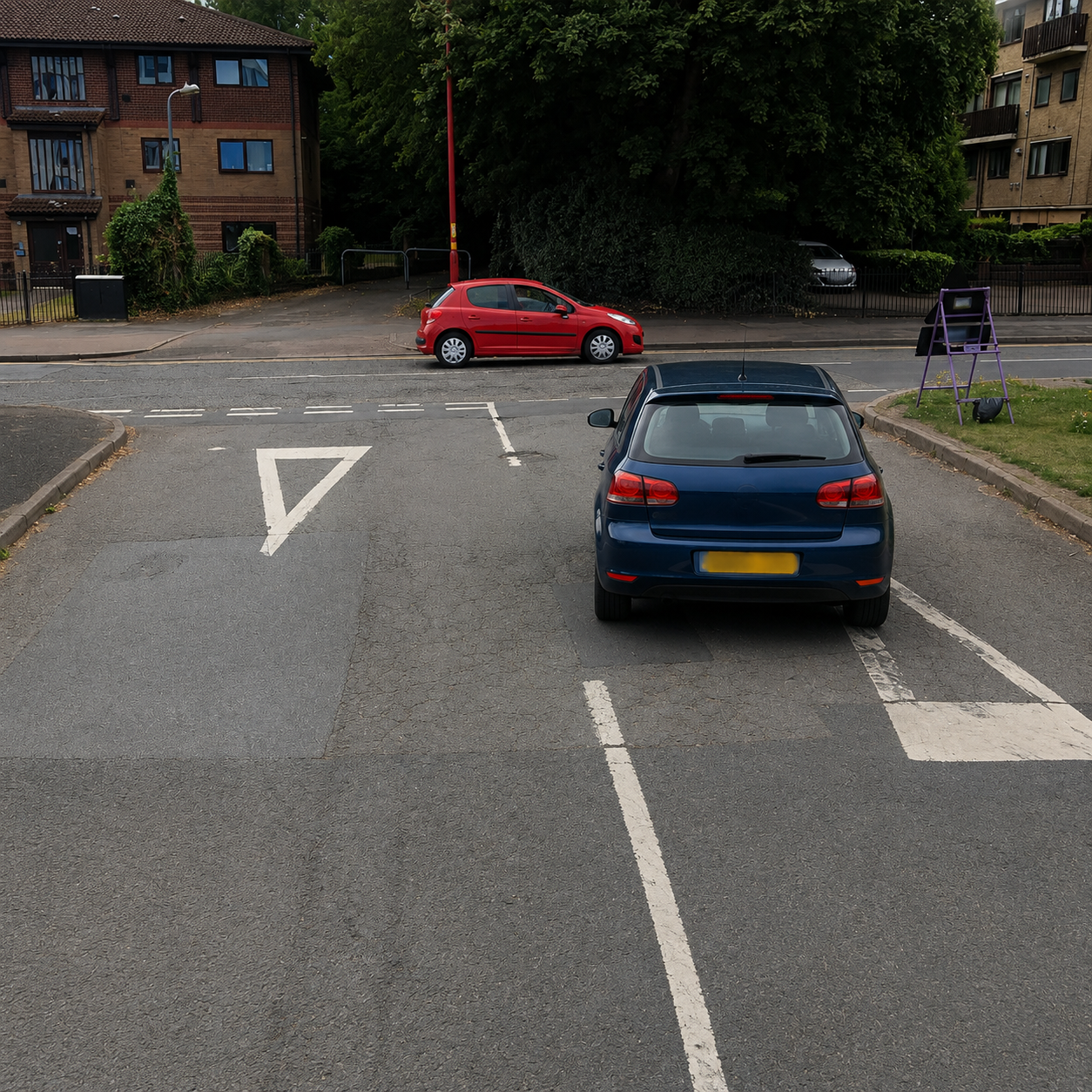 Avoid
Avoid
Read moreShow less
Highway Code
This lesson is a revision aid, not a replacement for The Highway Code.
Rule 173
On dual carriageways, check whether the central reservation is deep enough to protect your vehicle's full length. If not, treat the crossing as one manoeuvre across both carriageways.
Read on GOV.UKMore in Dual carriageways
Joining from a slip road
The slip road exists to remove the need for anyone to give way to you - build to carriageway speed before it ends, and …
Overtaking on a dual carriageway
Plan overtakes early, move out decisively when safe, and return to the left lane without cutting in.
Exiting a dual carriageway using a slip road
Plan the exit early, move into the correct lane in good time, and use the slip road to reduce speed safely after leavin…
Passing parked cars on a dual carriageway
A parked car on a dual carriageway isn't a hazard to react to at the last moment - reading it early, especially just af…