This video has no narration.
Practical test
Why it matters
This tests planning, mirror use, signalling, lane discipline, speed control, and how safely you adapt from a higher-speed road to the next junction.
What to look out for
Use the countdown markers
Countdown markers help you judge how close the exit is and whether your lane position is already settled.
Slip road means transition
Treat the slip road as the place where you move from higher-speed traffic into the next road layout.
Key steps
- 1 Read direction signs and countdown markers early so you know which exit and lane you need.
- 2 Check mirrors, signal in good time, and move into the left lane without cutting across late.
- 3 Keep a safe following distance and avoid slowing sharply while still on the main carriageway.
- 4 Enter the slip road smoothly, then brake progressively as the speed limit and road layout change.
- 5 Look ahead for bends, queues, roundabouts, traffic lights, or give-way lines at the end of the slip road.
Read moreShow less
Common mistakes
Leaving the lane change too late
Plan from the first direction sign and move left early enough that the exit feels calm, not rushed.
Braking too hard on the main carriageway
Maintain an appropriate speed until you are on the slip road unless traffic ahead means you must slow sooner.
Forgetting the road after the exit
As soon as you enter the slip road, look ahead for the next junction, queue, bend, or speed-limit change.
Read moreShow less
Example scenarios
Illustrative, AI-generated examples - not real photographs.
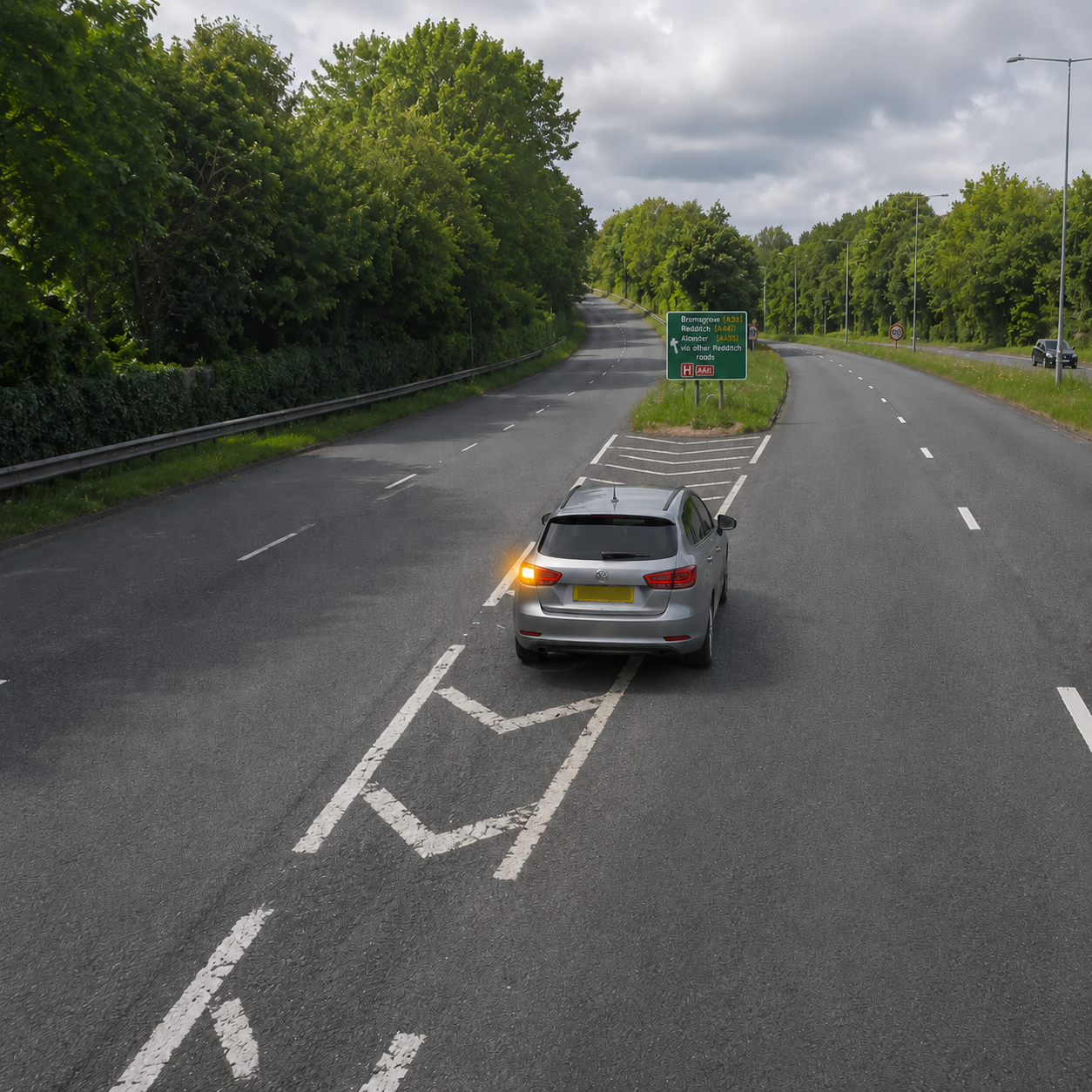 Avoid
Avoid
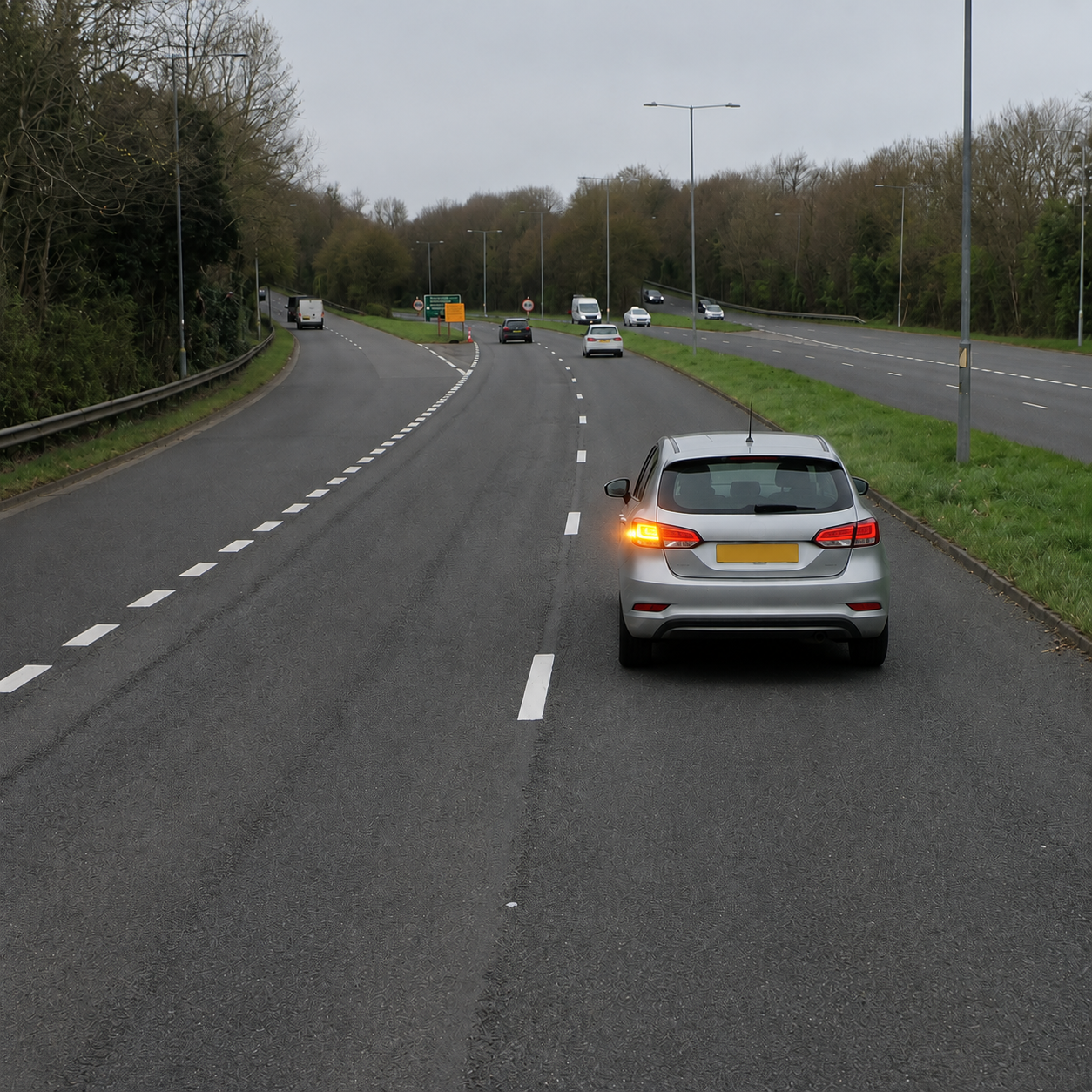 Avoid
Avoid
Read moreShow less
Highway Code
This lesson is a revision aid, not a replacement for The Highway Code.
Rule 137
On a two-lane dual carriageway, stay in the left-hand lane and only use the right-hand lane for overtaking or turning right - so you're normally already positioned for an exit rather than needing a late lane change.
Read on GOV.UKRule 133
Before changing lane, check your mirrors and glance sideways so you don't force another road user to change speed or course.
Read on GOV.UKRead moreShow less
More in Dual carriageways
Joining from a slip road
The slip road exists to remove the need for anyone to give way to you - build to carriageway speed before it ends, and …
Overtaking on a dual carriageway
Plan overtakes early, move out decisively when safe, and return to the left lane without cutting in.
Turning right using a central reservation gap
A central reservation gap isn't one crossing, it's two - each carriageway is a separate decision, and the reservation i…
Passing parked cars on a dual carriageway
A parked car on a dual carriageway isn't a hazard to react to at the last moment - reading it early, especially just af…