This video has no narration.
Practical test
Why it matters
Overtaking tests lane discipline, mirror use, judgement, and awareness of speed differences.
What to look out for
Three-part overtake
Mirrors, move out, pass steadily, then return left with space.
Committing is safer than hovering
Once you've moved out and the gap is confirmed safe, complete the overtake positively. Half-committing - sitting alongside the other vehicle without progressing - removes your view of what's ahead and leaves you exposed longer than necessary.
Key steps
- 1 Check mirrors and the road well ahead before deciding to overtake.
- 2 Check your mirrors and take a sideways glance for your blind spot, then move out only when the right lane is clearly safe and the overtake is worthwhile - a vehicle can be sitting just behind your shoulder where the mirror doesn't show.
- 3 Pass with steady speed and keep a safe gap from the vehicle you are overtaking.
- 4 Return left only when you can see the overtaken vehicle clearly in your mirror.
Read moreShow less
Common mistakes
Moving out too early
Do not leave your lane until the overtake is clearly on and the right lane is safely available.
Cutting in front of the vehicle too soon
Return left only once the overtaken vehicle is clearly visible in your interior mirror with safe space left.
Harsh steering during the lane change
Keep the steering gentle and progressive so the car moves across smoothly rather than darting sideways.
Read moreShow less
Example scenarios
Illustrative, AI-generated examples - not real photographs.
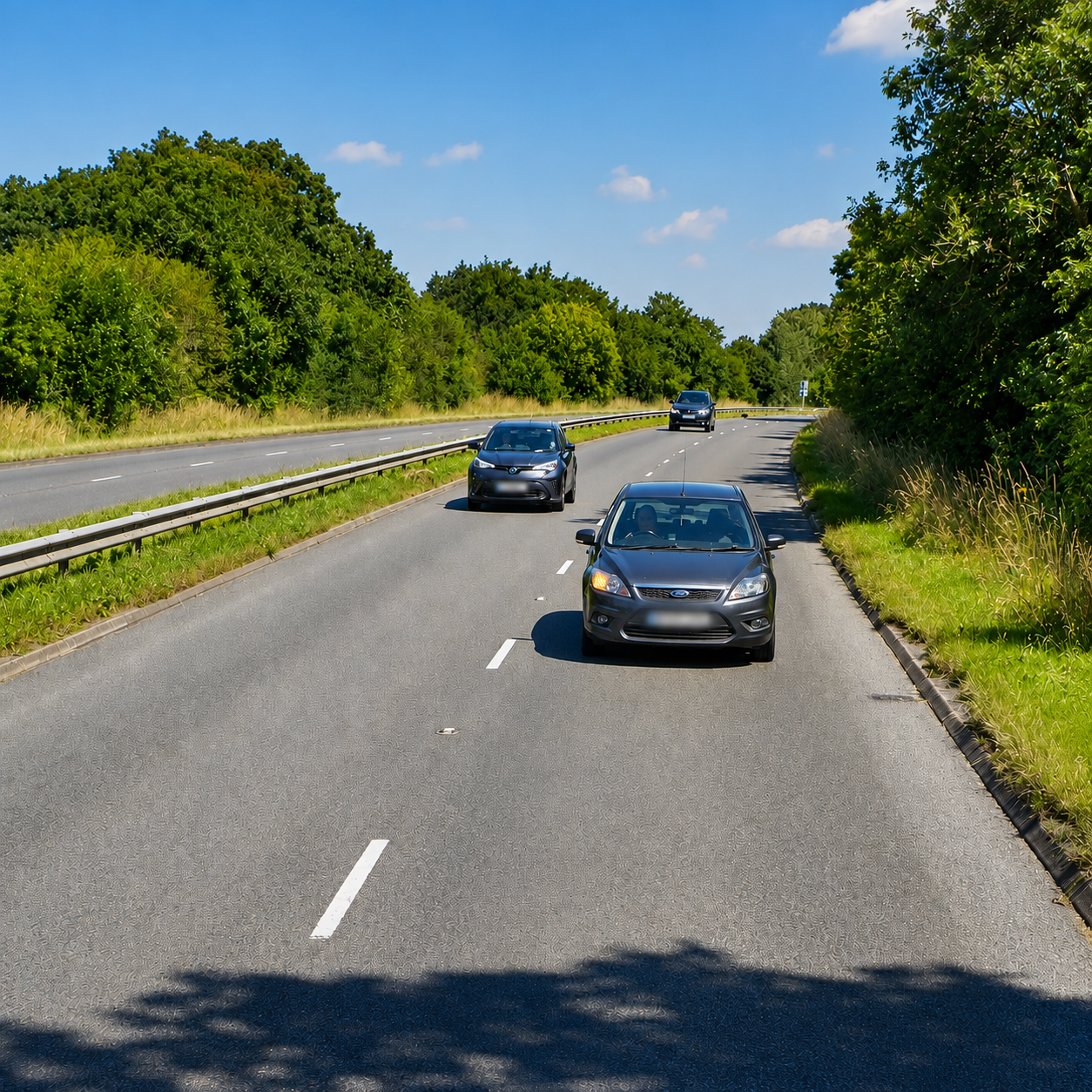 Avoid
Avoid
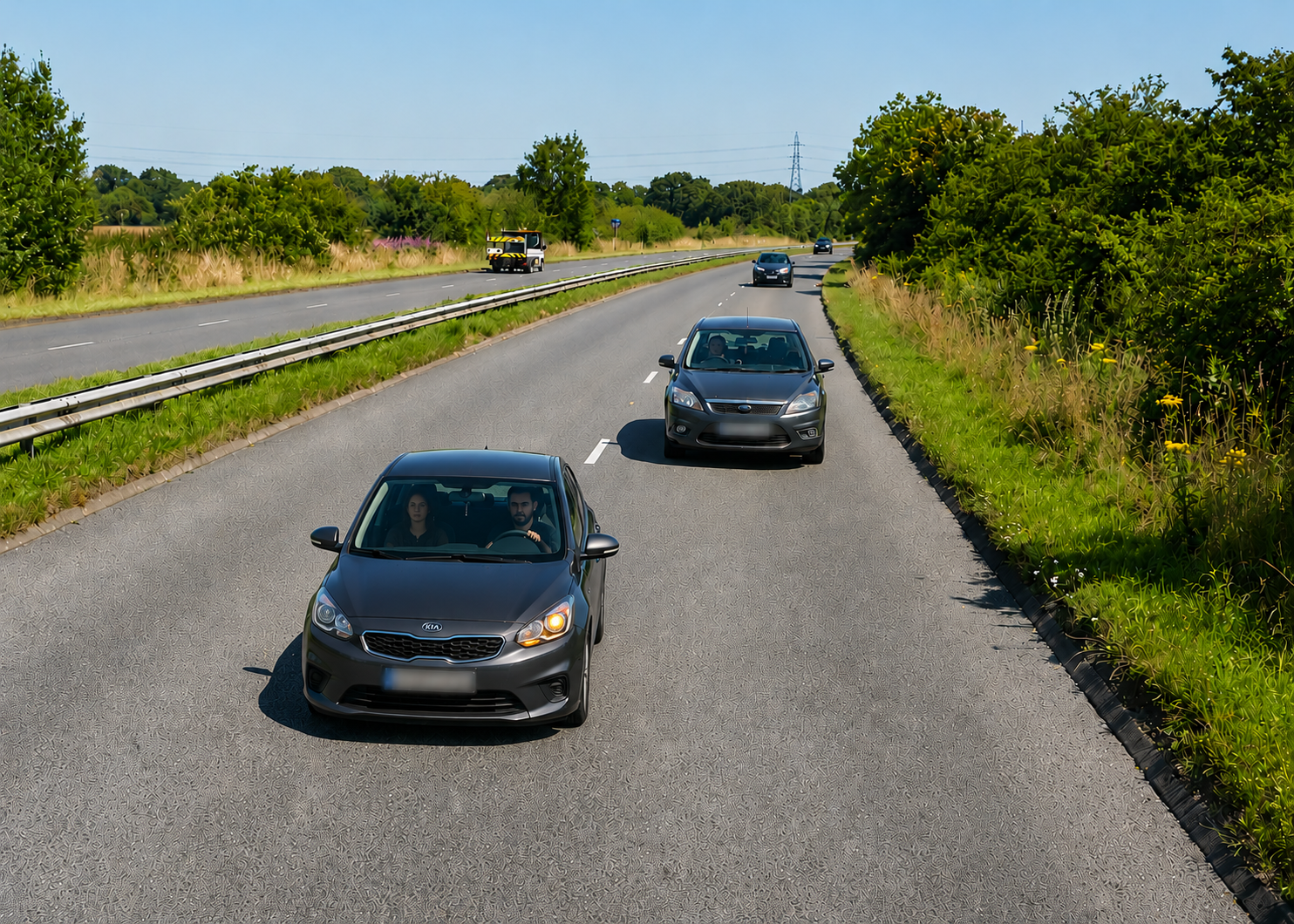 Avoid
Avoid
Read moreShow less
Highway Code
This lesson is a revision aid, not a replacement for The Highway Code.
Rule 162
Before overtaking, make sure the road is sufficiently clear ahead, no one has started to overtake you, and there's a suitable gap in front of the road user you plan to overtake.
Read on GOV.UKRule 137
On a two-lane dual carriageway, stay in the left-hand lane and use the right-hand lane only for overtaking or turning right, returning to the left when you've finished.
Read on GOV.UKRule 133
Before changing lane, use your mirrors and if necessary take a quick sideways glance, so you don't force another road user to change speed or course.
Read on GOV.UKRead moreShow less
More in Dual carriageways
Joining from a slip road
The slip road exists to remove the need for anyone to give way to you - build to carriageway speed before it ends, and …
Exiting a dual carriageway using a slip road
Plan the exit early, move into the correct lane in good time, and use the slip road to reduce speed safely after leavin…
Turning right using a central reservation gap
A central reservation gap isn't one crossing, it's two - each carriageway is a separate decision, and the reservation i…
Passing parked cars on a dual carriageway
A parked car on a dual carriageway isn't a hazard to react to at the last moment - reading it early, especially just af…