This video has no narration.
Practical test
Why it matters
Examiners are specifically watching whether you build speed early enough to merge without anyone else adjusting for you - joining too slowly or hesitating on the slip road is one of the more common serious faults at this stage of the test.
What to look out for
Speed first, gap second
Decide your gap only once you're already close to carriageway speed - trying to pick a gap while still accelerating means judging two moving things at once.
Some slip roads keep going
Occasionally the lane continues alongside the carriageway as its own lane for a while rather than ending abruptly. If it does, you don't have to force an immediate merge - use the extra distance to settle in properly.
Key steps
- 1 Start building speed as soon as you're on the slip road, aiming to reach the same speed as the main carriageway before the slip road ends - the earlier you start, the less urgent the merge becomes.
- 2 While you're accelerating, use your mirrors to read the gaps forming in the left-hand lane, so you already know which gap you're aiming for before you need to commit to it.
- 3 Check the blind spot over your shoulder in the last few seconds before moving across - mirrors alone won't show a vehicle sitting just behind your rear pillar.
- 4 You must give way to traffic already on the carriageway: only move across once a gap is actually there, not because you're hoping someone will brake for you.
- 5 If the slip road is ending and no gap has appeared, ease off speed on the slip road itself rather than at the merge point - you're allowed to lose speed there, but not once you're committed to moving across.
Read moreShow less
Common mistakes
Waiting to merge before building speed
By the time you're at the end of the slip road it's too late to accelerate - traffic behind has to slow for you instead of you fitting into a gap they've already made.
Fixating on the nearest car
Read the whole pattern of traffic in your mirrors. The car two behind your target gap may be closing faster than the one right next to it.
Forcing the merge
You don't have priority. If nobody is moving over, hold your position on the slip road rather than pushing into a gap that isn't there yet.
Read moreShow less
Example scenarios
Illustrative, AI-generated examples - not real photographs.
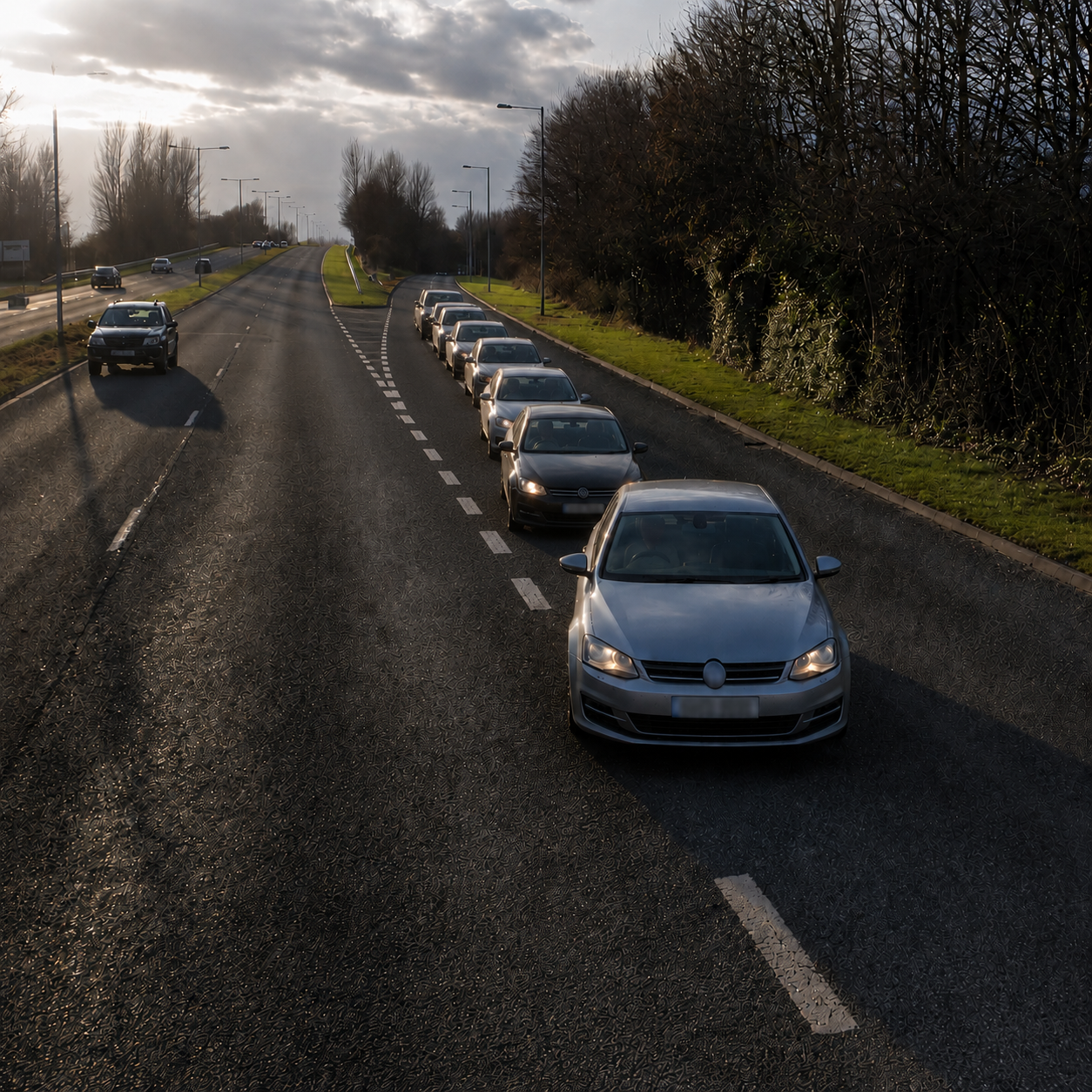 Avoid
Avoid
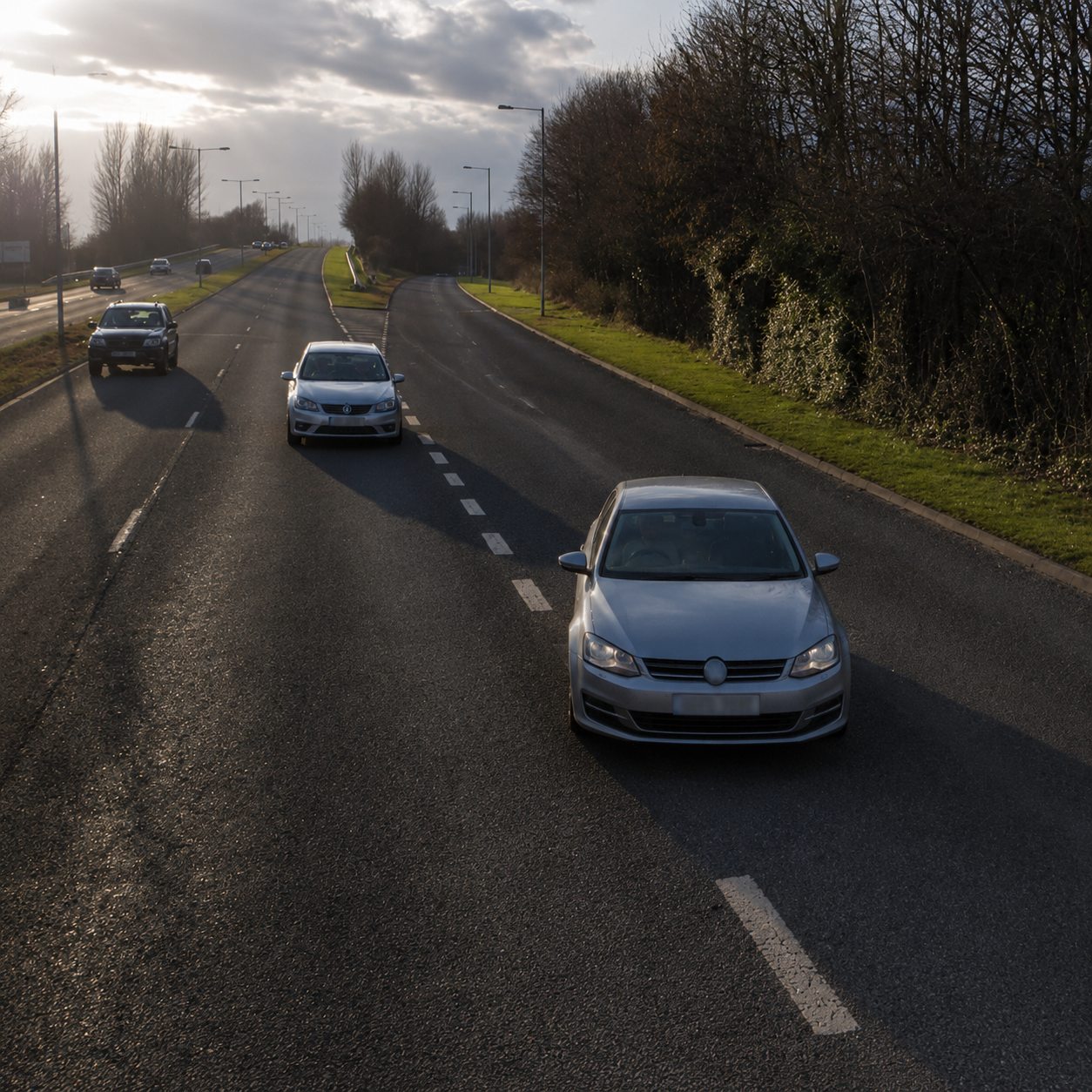 Avoid
Avoid
Read moreShow less
Highway Code
This lesson is a revision aid, not a replacement for The Highway Code.
Rule 134
Follow the signs and road markings and get into the correct lane. Merging in turn is only recommended at very low speed, not at higher speed.
Read on GOV.UKRule 137
On a two-lane dual carriageway, stay in the left-hand lane and use the right-hand lane only for overtaking or turning right - so once you've joined, the left lane is your normal position.
Read on GOV.UKRead moreShow less
More in Dual carriageways
Overtaking on a dual carriageway
Plan overtakes early, move out decisively when safe, and return to the left lane without cutting in.
Exiting a dual carriageway using a slip road
Plan the exit early, move into the correct lane in good time, and use the slip road to reduce speed safely after leavin…
Turning right using a central reservation gap
A central reservation gap isn't one crossing, it's two - each carriageway is a separate decision, and the reservation i…
Passing parked cars on a dual carriageway
A parked car on a dual carriageway isn't a hazard to react to at the last moment - reading it early, especially just af…