This video has no narration.
Practical test
Why it matters
Examiners are watching whether a stationary hazard like parked cars gets the same early planning as a moving one - especially right after moving off, when it's easy to still be settling into the drive rather than reading the road ahead.
What to look out for
A parked obstruction gives you time, not urgency
Unlike a moving vehicle, a parked car's position never changes - use that certainty to plan the lane change early rather than reacting to it late.
The routine doesn't shrink at lower speeds
Mirror, signal, manoeuvre applies exactly the same way on a 30mph dual carriageway as it does at 70mph - only the closing speeds change.
Key steps
- 1 Spot the obstruction early - parked cars outside shops don't move, so there's no reason to wait until you're close to decide you need to change lane.
- 2 Check your mirrors and take a blind-spot glance before you commit, the same as any other lane change - a vehicle can be sitting exactly where your mirror doesn't show.
- 3 Signal in good time, then move into the right-hand lane smoothly once it's clear, matching your speed to the traffic already in that lane.
- 4 Hold your lane past the parked cars rather than cutting back in early - wait until you can see them behind you before considering the return.
- 5 Check your mirrors again and move back to the left-hand lane once it's clear, under control the same as any other overtake.
Read moreShow less
Common mistakes
Leaving the lane change too late
A parked car doesn't move or change your plan at the last second - decide and signal well before you reach it, especially just after pulling away from a stop when you're still building speed.
Treating a low-speed dual carriageway as less demanding
A 30mph dual carriageway still needs the full mirror-signal-manoeuvre routine - the lower speed limit doesn't remove the need to check properly before changing lane.
Cutting back in too soon
Wait until the parked cars are clearly behind you in your mirror before returning to the left lane, rather than as soon as you feel past them.
Read moreShow less
Example scenarios
Illustrative, AI-generated examples - not real photographs.
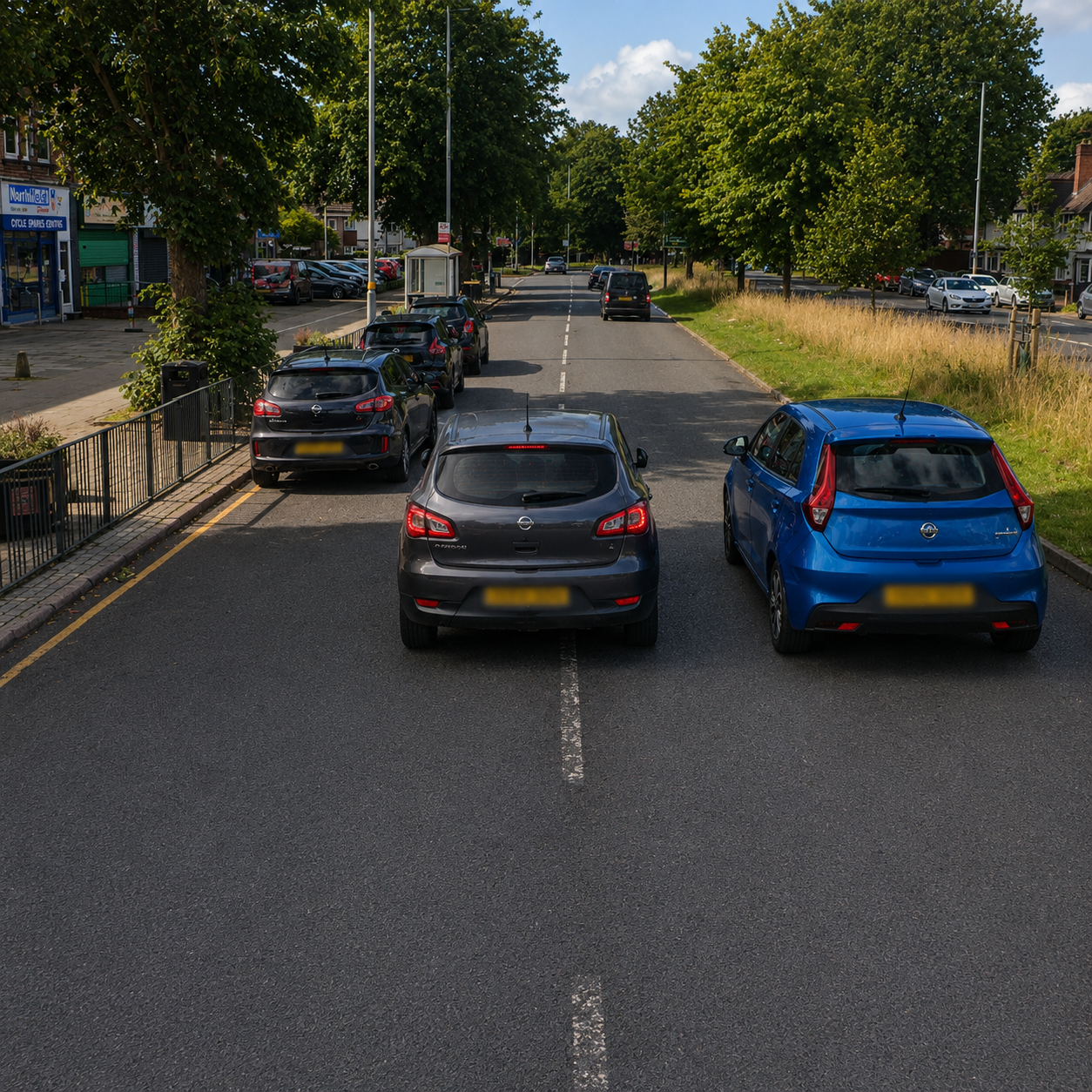 Avoid
Avoid
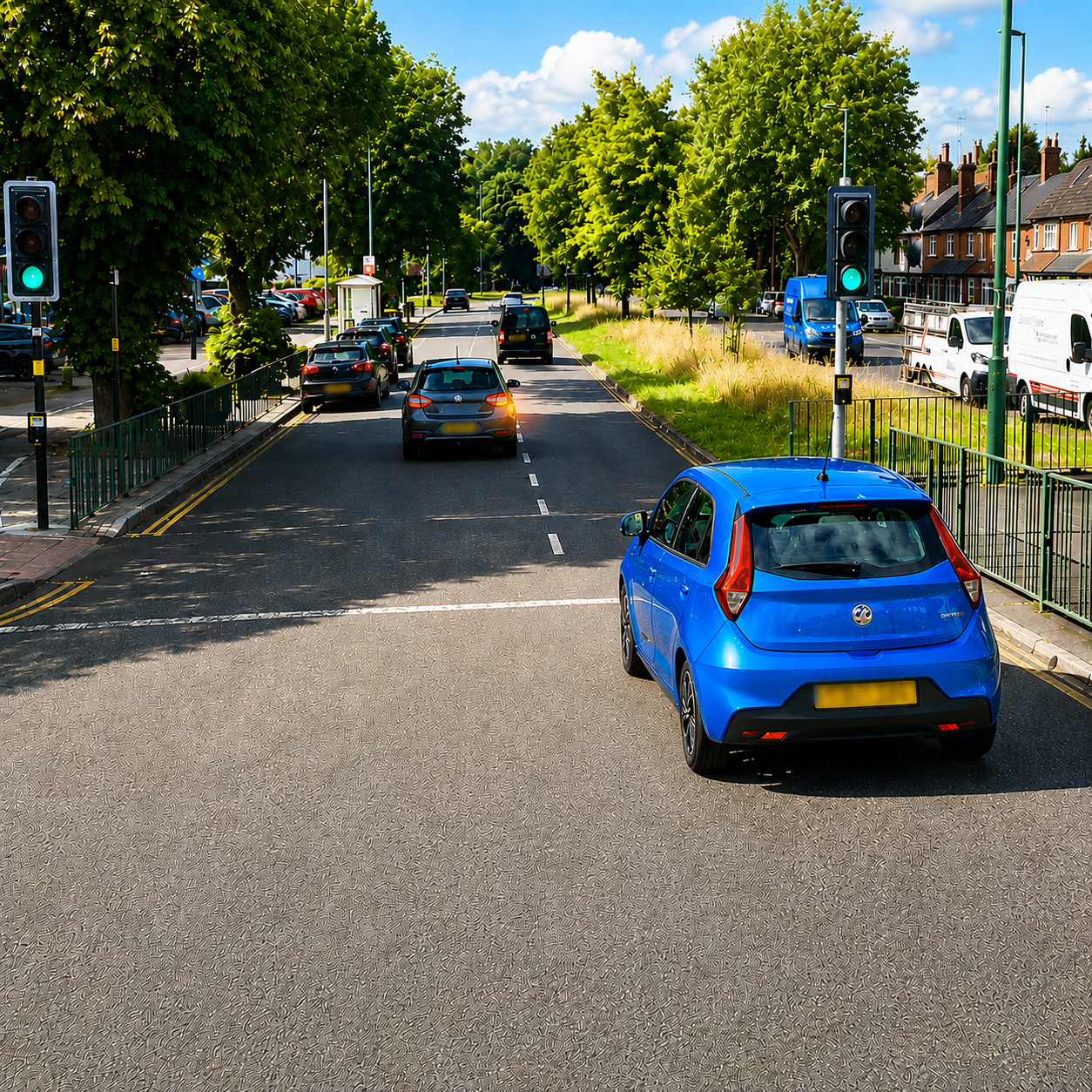 Do
Do
Read moreShow less
Highway Code
This lesson is a revision aid, not a replacement for The Highway Code.
Rule 137
On a two-lane dual carriageway, stay in the left-hand lane and use the right-hand lane only for overtaking or turning right, returning to the left when you've finished.
Read on GOV.UKRule 133
Before changing lane, use your mirrors and if necessary take a quick sideways glance, so you don't force another road user to change speed or course.
Read on GOV.UKRule 162
Before overtaking, make sure the road is sufficiently clear ahead, no one has started to overtake you, and there's a suitable gap in front of the road user you plan to overtake.
Read on GOV.UKRead moreShow less
More in Dual carriageways
Joining from a slip road
The slip road exists to remove the need for anyone to give way to you - build to carriageway speed before it ends, and …
Overtaking on a dual carriageway
Plan overtakes early, move out decisively when safe, and return to the left lane without cutting in.
Exiting a dual carriageway using a slip road
Plan the exit early, move into the correct lane in good time, and use the slip road to reduce speed safely after leavin…
Turning right using a central reservation gap
A central reservation gap isn't one crossing, it's two - each carriageway is a separate decision, and the reservation i…