This video has no narration.
Practical test
Why it matters
Examiners want to see the same care applied consistently, not just at the first give-way point but at every one in a row.
What to look out for
Each point is its own decision
Priority at one give-way point tells you nothing about the next. Read every one fresh - who's on the priority side, and is the gap actually clear?
The sign sets priority, the road decides safety
A 'priority over oncoming vehicles' sign means you'd normally go first; a 'give way to oncoming vehicles' sign means wait. Either way, only go once you can see the other driver has actually acted on it.
Key steps
- 1 Read each give-way point as its own decision: who has priority, and is the road actually clear.
- 2 Keep your speed low enough between points that you can stop or adjust for the next one without rushing.
- 3 Don't assume priority carries over from one give-way point to the next - re-check each time.
- 4 Watch for a vehicle already committed to a gap, even if the signs say priority is technically yours.
Read moreShow less
Common mistakes
Treating the whole sequence as one situation
Slow down and assess each give-way point individually rather than carrying speed through all of them at once.
Pushing through because you had priority at the last point
Priority is set by the signs and the road at each point on its own - check again rather than assuming it carries forward.
Example scenarios
Illustrative, AI-generated examples - not real photographs.
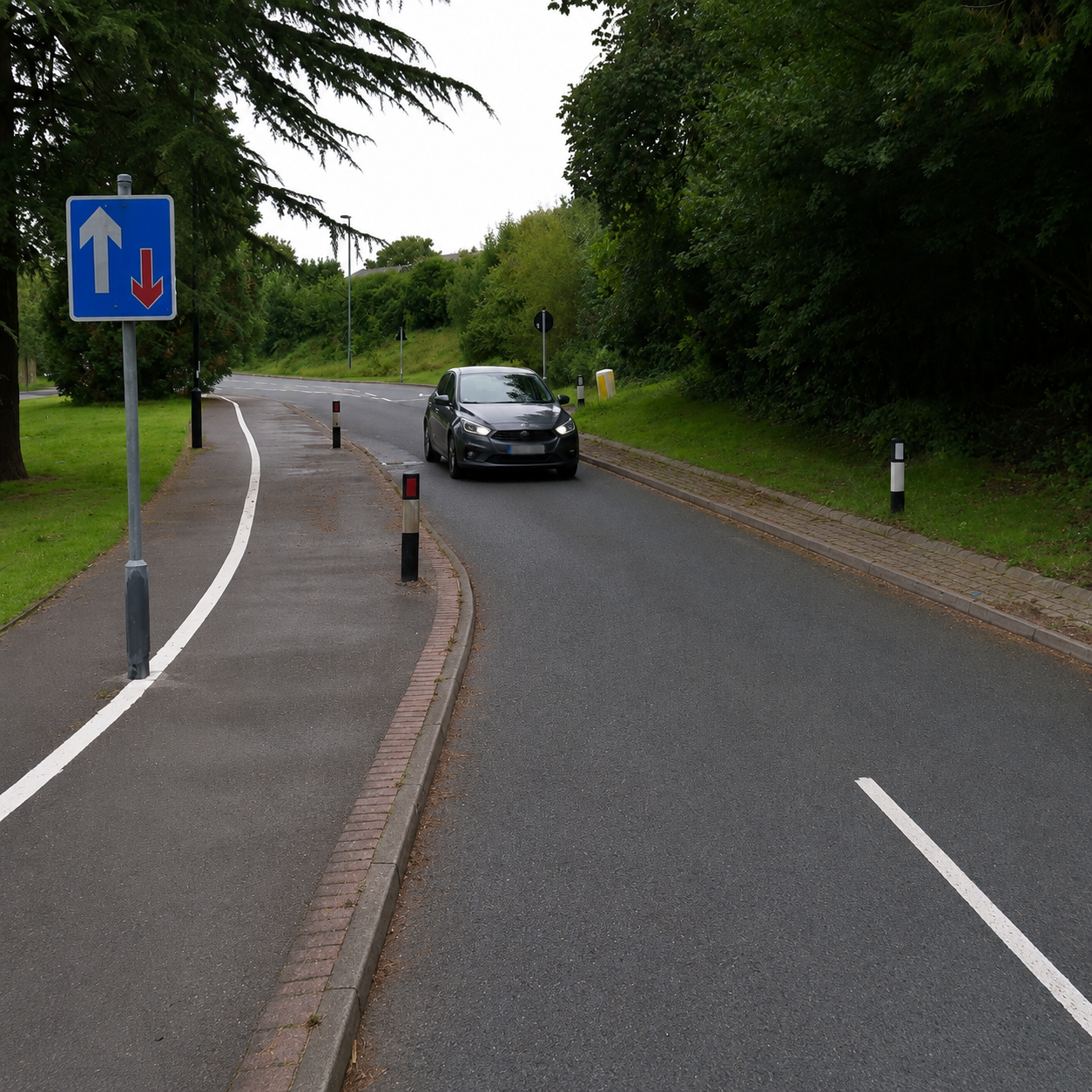 Avoid
Avoid
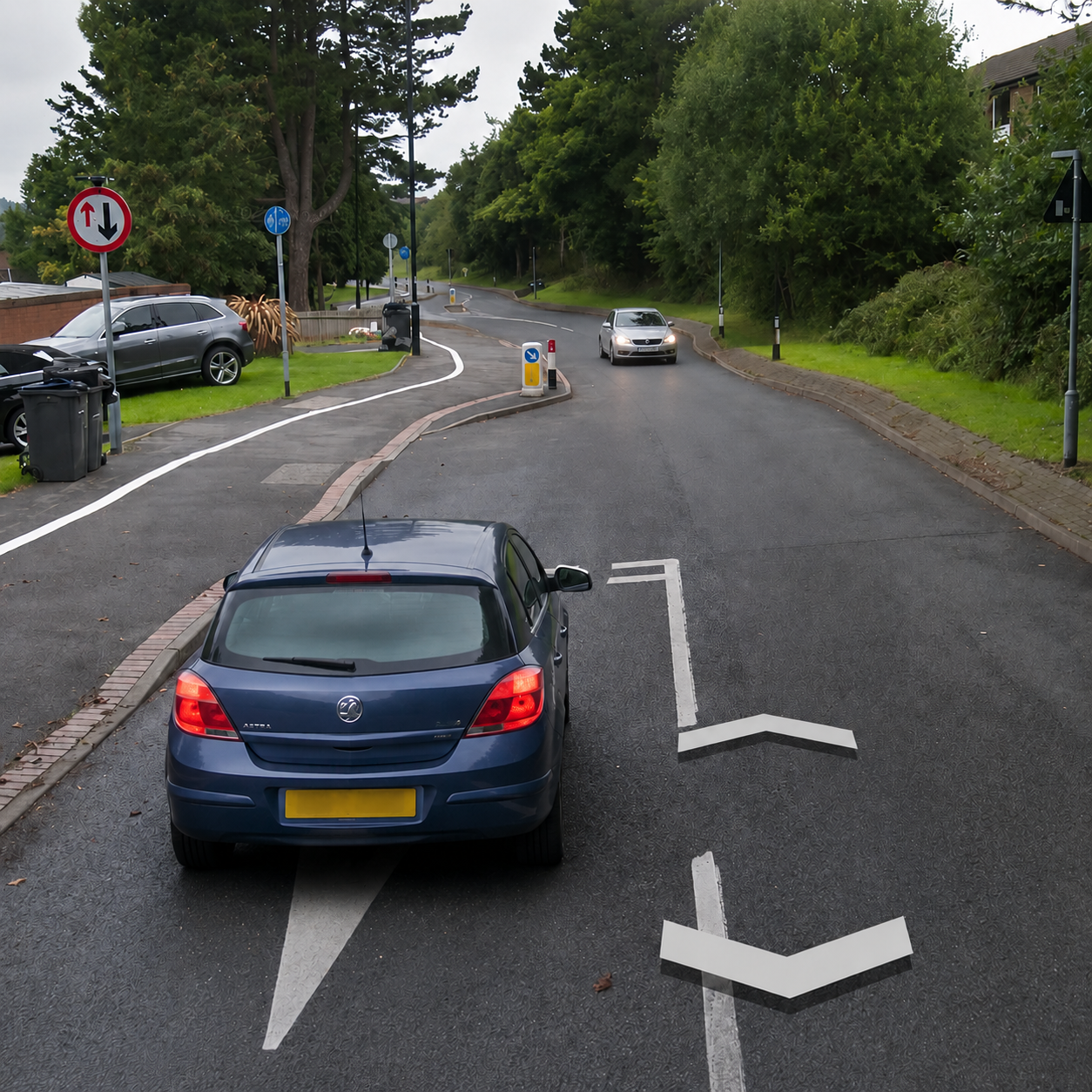 Do
Do
Read moreShow less
Highway Code
This lesson is a revision aid, not a replacement for The Highway Code.
Rule 163
Give way to oncoming vehicles before passing parked vehicles or other obstructions on your side of the road, and give cyclists and motorcyclists at least as much room as you would a car.
Read on GOV.UKMore in Meeting traffic
Proceeding when you have priority
Having priority isn't permission to go - it only becomes safe to proceed once you can see the other driver has actually…
Stopping when you do not have priority
If the obstruction is on your side, the decision to stop is yours to make early - waiting until the last moment turns a…
Giving way where neither side has priority
A narrow bridge like this doesn't come with a sign to settle who goes first - there's no obstruction on one side to han…