This video has no narration.
Practical test
Why it matters
Examiners are watching whether you spot this kind of hazard early and adjust your speed for it, and whether you make a sensible, unhurried decision about going through - not whether you can quote a rule for who has priority, since none assigns it here.
What to look out for
No sign decides this one
Unlike a parked car narrowing one side, a bridge like this narrows the road for both directions equally - so there's no Highway Code rule that hands either driver priority. It's read from the road, not a sign.
Committed beats first
The driver who's already on the crossing effectively has priority, whichever direction they came from - not whoever technically reached the approach first.
Key steps
- 1 Recognise the hazard early: a bridge or narrow point where the road itself - not a parked car or an obstruction - is what forces single-file traffic, so there's no side that automatically has priority.
- 2 Slow down in good time, the same way you would for any bend or dip that hides what's coming - a hump-back bridge hides the other side just as much as a blind bend does.
- 3 Look for an oncoming vehicle already committed to the crossing - if someone's already on the bridge or clearly closer to it, hold back and let them through rather than both of you arriving at once.
- 4 If you reach the narrow point with the way ahead clear, go through positively at a controlled speed - hesitating in the middle of a blind crossing is worse than committing once you've checked it's clear.
- 5 Keep your position steady through the crossing and don't speed up again until you're fully back on the normal width of road.
Read moreShow less
Common mistakes
Assuming priority because you got there first
There's no rule granting priority on an unsigned narrow bridge - arriving first isn't the same as being safely committed. Check the other side is actually clear before you commit.
Meeting another vehicle already on the bridge
If you only spot the oncoming car once you're both close to the narrowest point, back off early rather than racing to get through first - reversing back off a bridge is far harder than waiting before it.
Speeding up as soon as you're through
Stay controlled until you're fully back on the normal width of road, not just past the narrowest point.
Read moreShow less
Example scenarios
Illustrative, AI-generated examples - not real photographs.
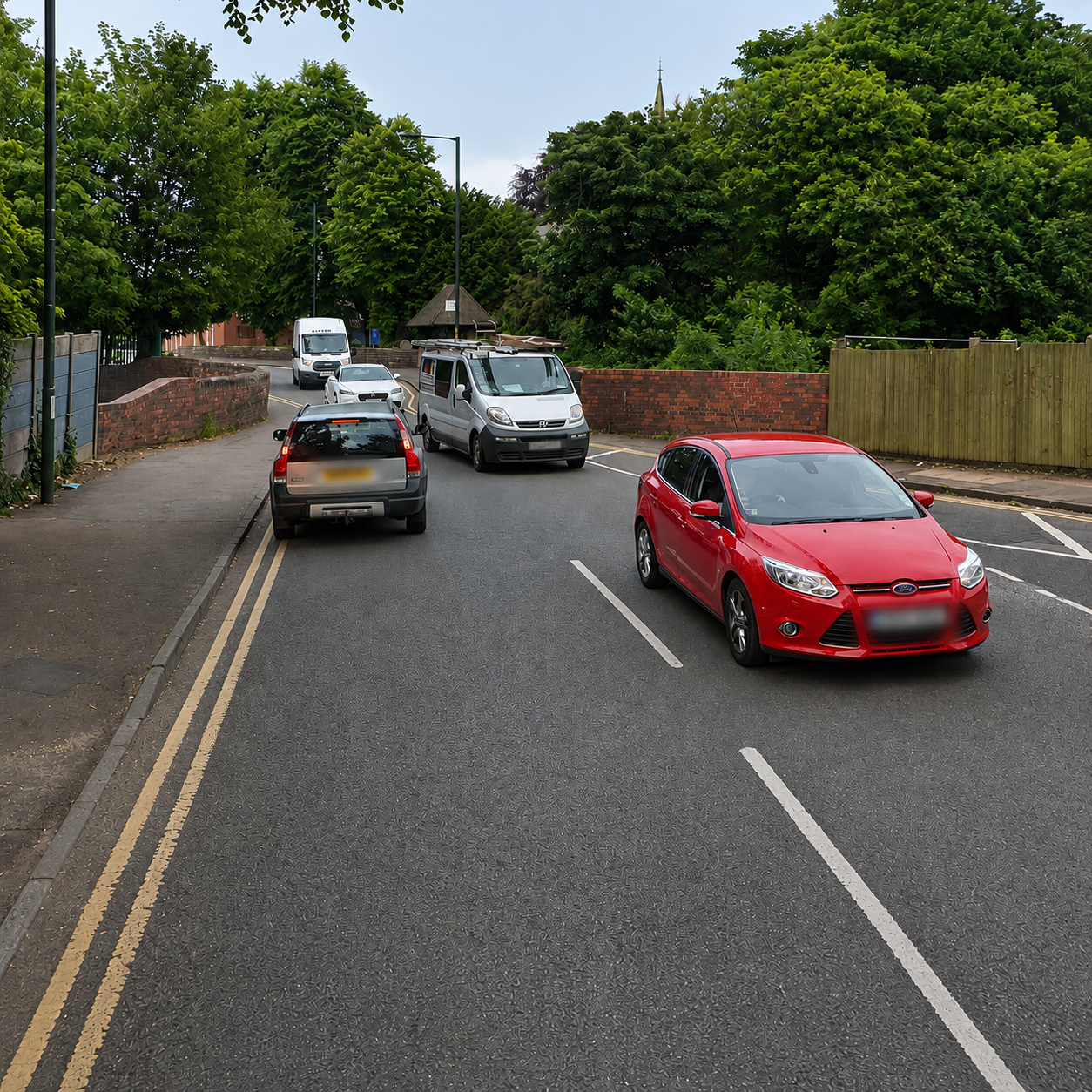 Avoid
Avoid
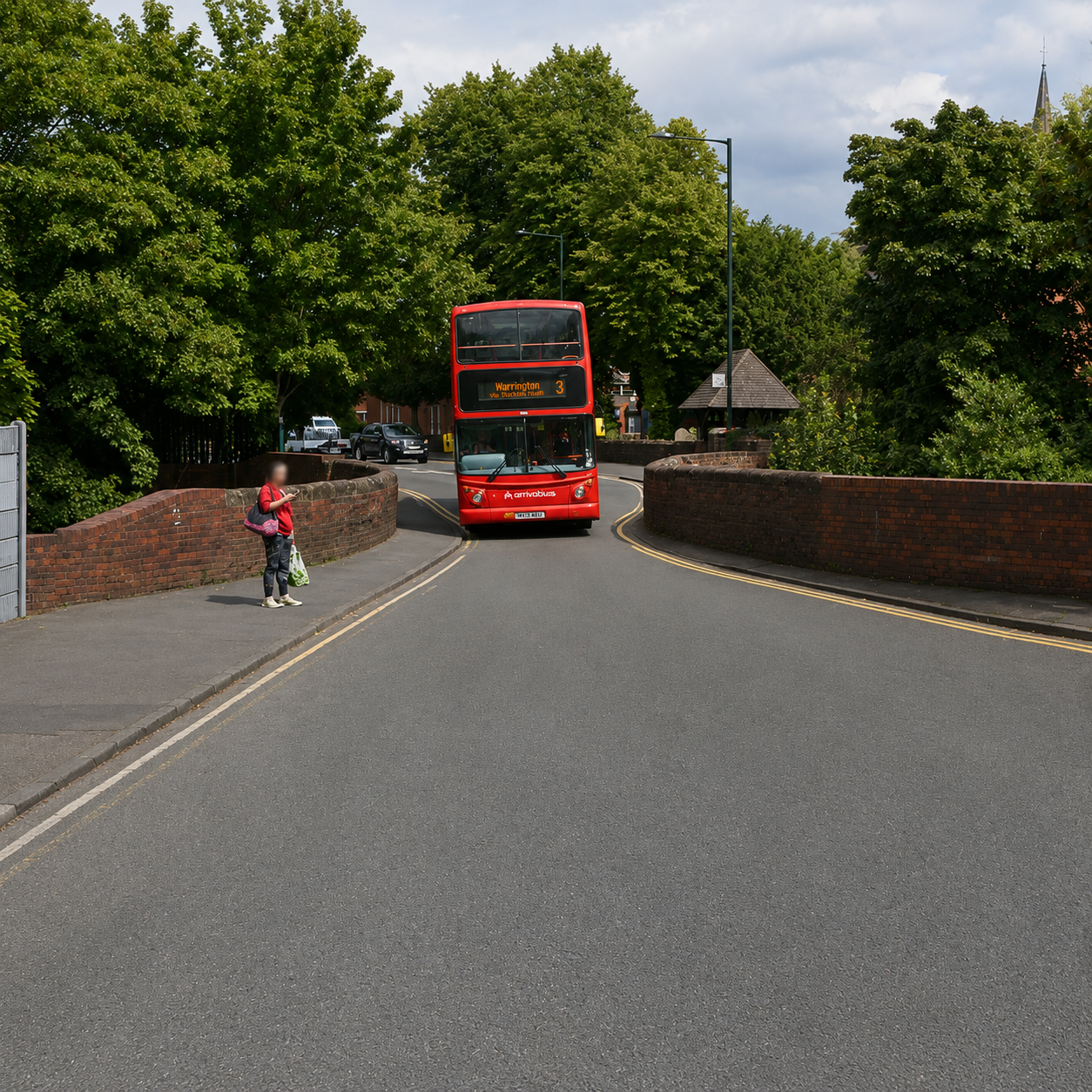 Do
Do
Read moreShow less
Highway Code
This lesson is a revision aid, not a replacement for The Highway Code.
Rule 154
Take extra care on country roads and reduce your speed at approaches to bends, which can be sharper than they appear, and at junctions and turnings, which may be partially hidden.
Read on GOV.UKMore in Meeting traffic
Proceeding when you have priority
Having priority isn't permission to go - it only becomes safe to proceed once you can see the other driver has actually…
Stopping when you do not have priority
If the obstruction is on your side, the decision to stop is yours to make early - waiting until the last moment turns a…
Managing a sequence of give-way points
On a residential street with several give-way points in a row, each one is a separate decision - working through the se…