This video has no narration.
Practical test
Why it matters
Moving off is assessed every time you set off on test - normal, angled and hill starts, and after pulling up on the left. Examiners are mainly watching your observations, especially that final effective look before you move. Missing it, or moving off unsafely, could be recorded as a driving fault, and may be marked as serious or dangerous if another road user has to react to you - the level depends on the actual risk at the time.
What to look out for
The final look is the one that counts
Your earlier mirror and blind-spot checks set the scene, but the road keeps changing. The last look, immediately before you move, is what catches a cyclist or car that has appeared in the gap since.
Mirrors do not show everything
Every car has blind spots the mirrors cannot cover - big enough to hide a cyclist or motorcyclist. That is why the look round is not optional: it checks the exact area a mirror misses.
Key steps
- 1 Get the car ready to move and held still, so it will not roll when you release the brake. In a manual that usually means the right gear with the clutch near the biting point; in an automatic, in Drive with the brake held. Whichever controls you use to hold it - footbrake, handbrake or brake-hold - the car must be secure and ready, because none of the checks below mean anything until you can actually pull away.
- 2 Use your mirrors - interior and both door mirrors - to build a picture of the traffic around you, before you think about signalling or moving.
- 3 Look round to check the blind spots: the areas your mirrors cannot show, which are big enough to hide a cyclist or motorcyclist. Moving away from the left-hand kerb you pull out to the right, so the key blind spot is over your right shoulder - but still take in the whole scene, including anyone close on the left such as a cyclist or pedestrian.
- 4 Signal only if it would genuinely help another road user - approaching traffic, a cyclist or a pedestrian. A signal tells others what you intend; it does not make the move safe and it never replaces looking. Time it so it helps rather than misleads.
- 5 Take a final look round immediately before you move, with the right blind spot as the priority. This is the check that catches whatever has appeared since your earlier look - a bike filtering past, a car now closing from behind.
- 6 Only move once that final look shows it is genuinely safe, then release the clutch or brake smoothly and build speed while you keep watching the road ahead.
Read moreShow less
Common mistakes
Moving off on an out-of-date check
Your first mirror and blind-spot checks show the road a few seconds ago. Make a final effective look immediately before you move - this is the check that actually keeps you safe.
Signalling out of habit
Decide from what you can see, not from routine. A signal given without observation, or when nobody is there to benefit, adds nothing - and a poorly timed one can mislead approaching traffic.
Snatching the clutch after getting the checks right
Getting the observations right and then bringing the clutch up too quickly still causes a lurch or a stall. Release it as smoothly as you set it up.
Read moreShow less
Example scenarios
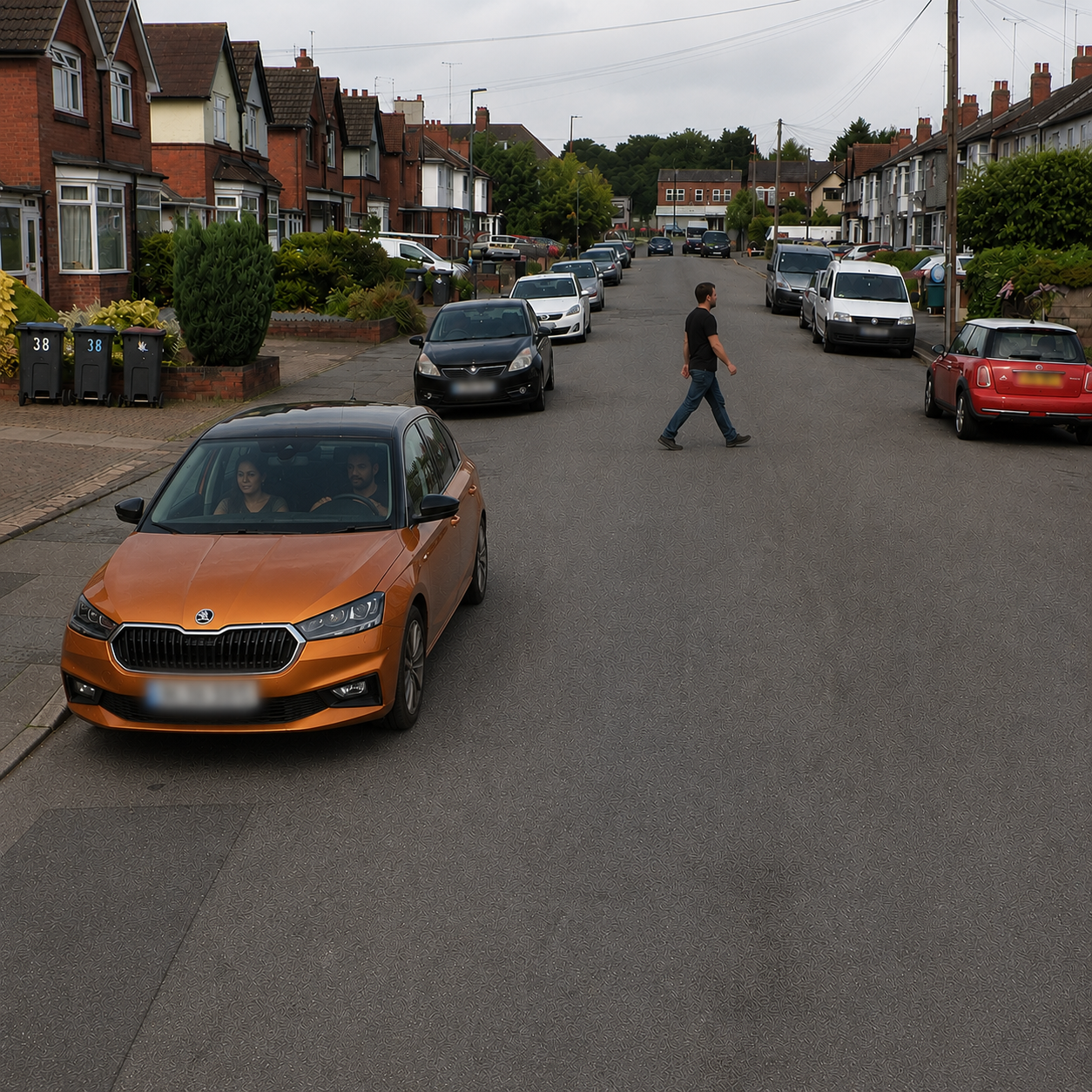
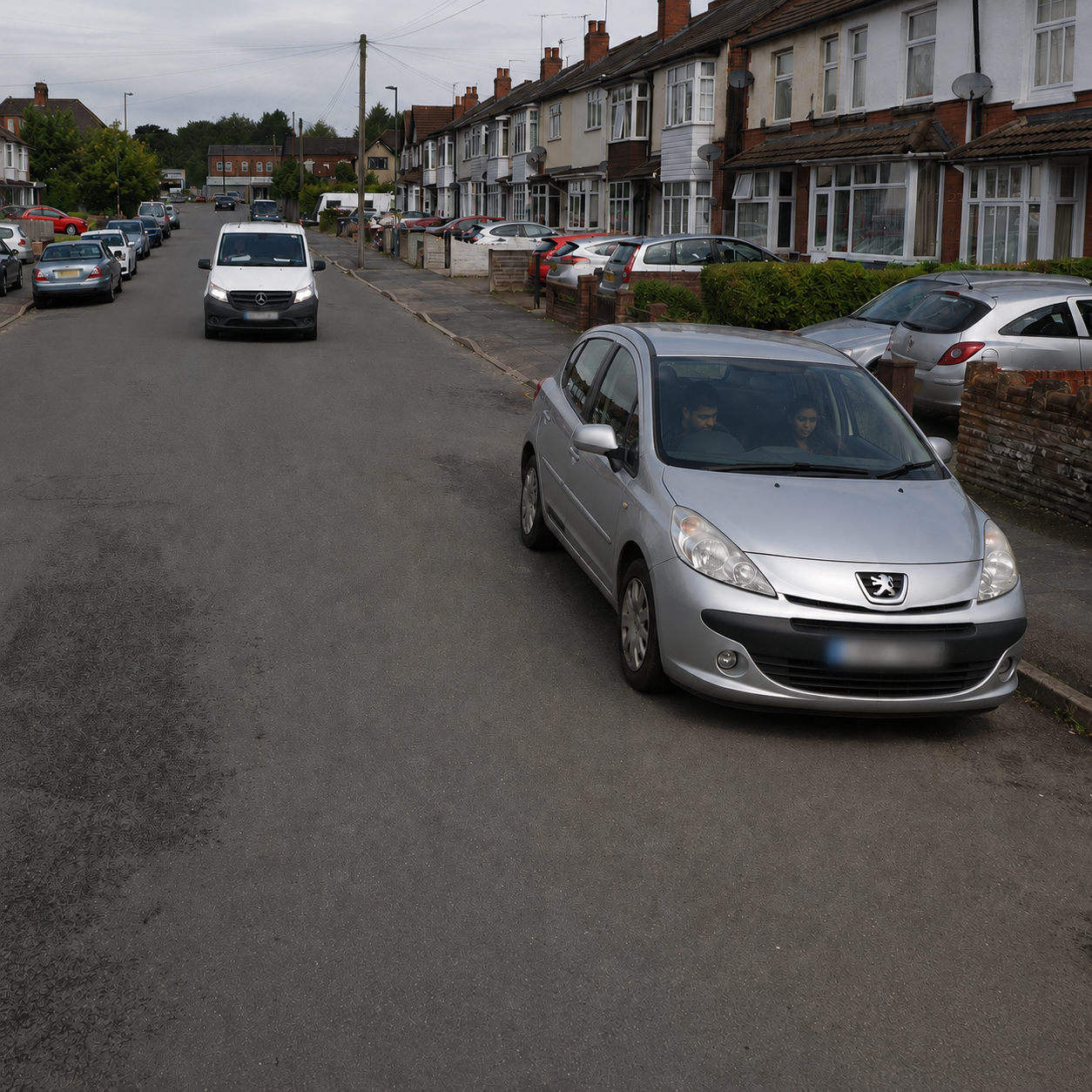
Illustrative, AI-generated examples - not real photographs.
 Avoid
Avoid
 Avoid
Avoid
Read moreShow less
Highway Code
This lesson is a revision aid, not a replacement for The Highway Code.
Rule 159
Before moving off you should use all your mirrors, check the blind spots, signal if necessary, take a final look round, and move off only when it is safe to do so.
Read on GOV.UKRule 161
Use your mirrors in good time before you signal, change direction or change speed. Remember mirrors do not cover every angle, so a blind-spot check is still needed.
Read on GOV.UK