This video has no narration.
Practical test
Why it matters
Examiners are watching whether you wait for a proper gap or force a marginal one - a hurried, close overtake of a cyclist is exactly the kind of judgement fault this skill is built to prevent.
What to look out for
A rejected gap isn't wasted time
Every oncoming vehicle that makes you wait is the manoeuvre working correctly - the overtake only happens once the road is properly clear, after several gaps that weren't.
1.5 metres, not close is safe enough
Give a cyclist the same room you'd give a car, and more if you're overtaking above 30mph.
Key steps
- 1 Hold back a safe following distance behind the cyclist while you look for a stretch of road that's clear enough for the whole overtake, not just clear enough to start one.
- 2 Treat a bend or oncoming vehicle as a reason to wait, not rush - if the gap isn't long enough to pass and be back on your side in good time, stay behind and look for the next one.
- 3 Once the road is genuinely clear, commit positively: build speed smoothly and move out with at least 1.5 metres of space from the cyclist - the same room you'd give a car.
- 4 Pass without cutting in - hold your line until the cyclist is clearly visible in your mirror, then move back progressively rather than swerving in front of them.
- 5 Check your mirror again as you settle back into the lane, the same final check you'd make after any overtake.
Read moreShow less
Common mistakes
Treating any gap in oncoming traffic as enough
A gap has to be long enough for the whole manoeuvre - out, past, and back - not just long enough to pull out. If in doubt, it isn't long enough yet.
Passing too close
1.5 metres isn't a suggestion - a cyclist is due the same room as a car, and more again above 30mph.
Cutting back in too soon
Wait until the cyclist is properly clear in your mirror before moving back left, rather than as soon as you feel past them.
Read moreShow less
Example scenarios
Illustrative, AI-generated examples - not real photographs.
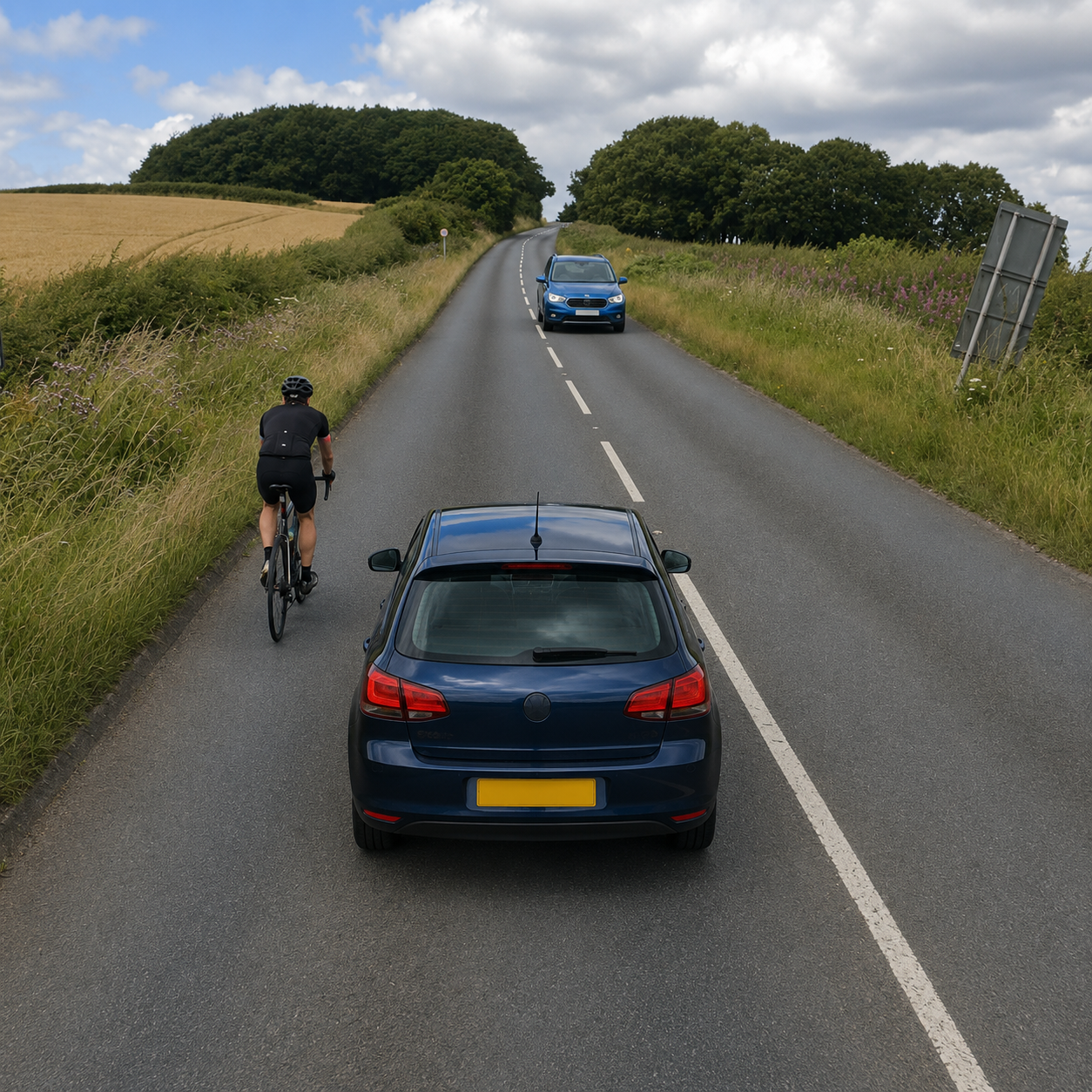 Avoid
Avoid
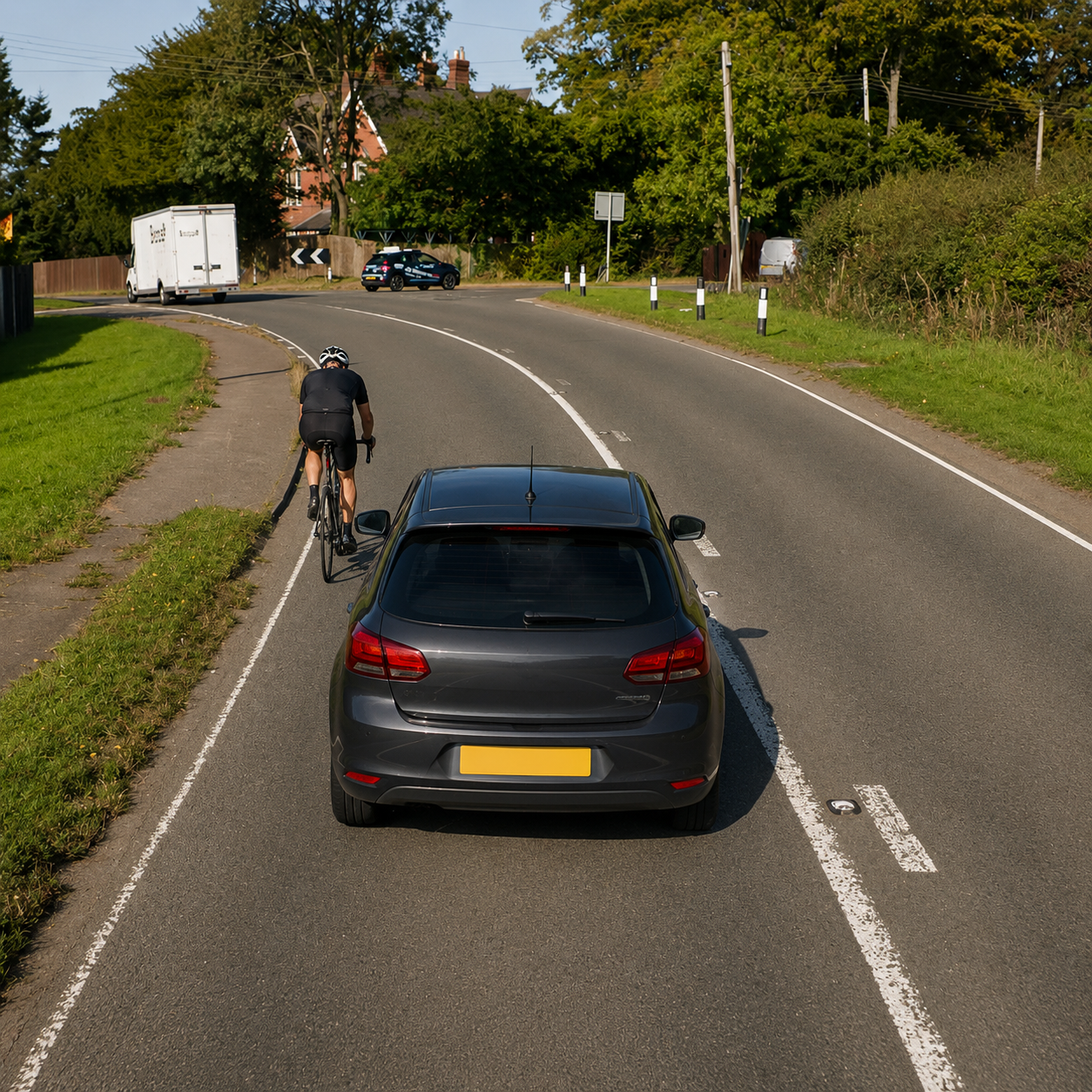 Avoid
Avoid
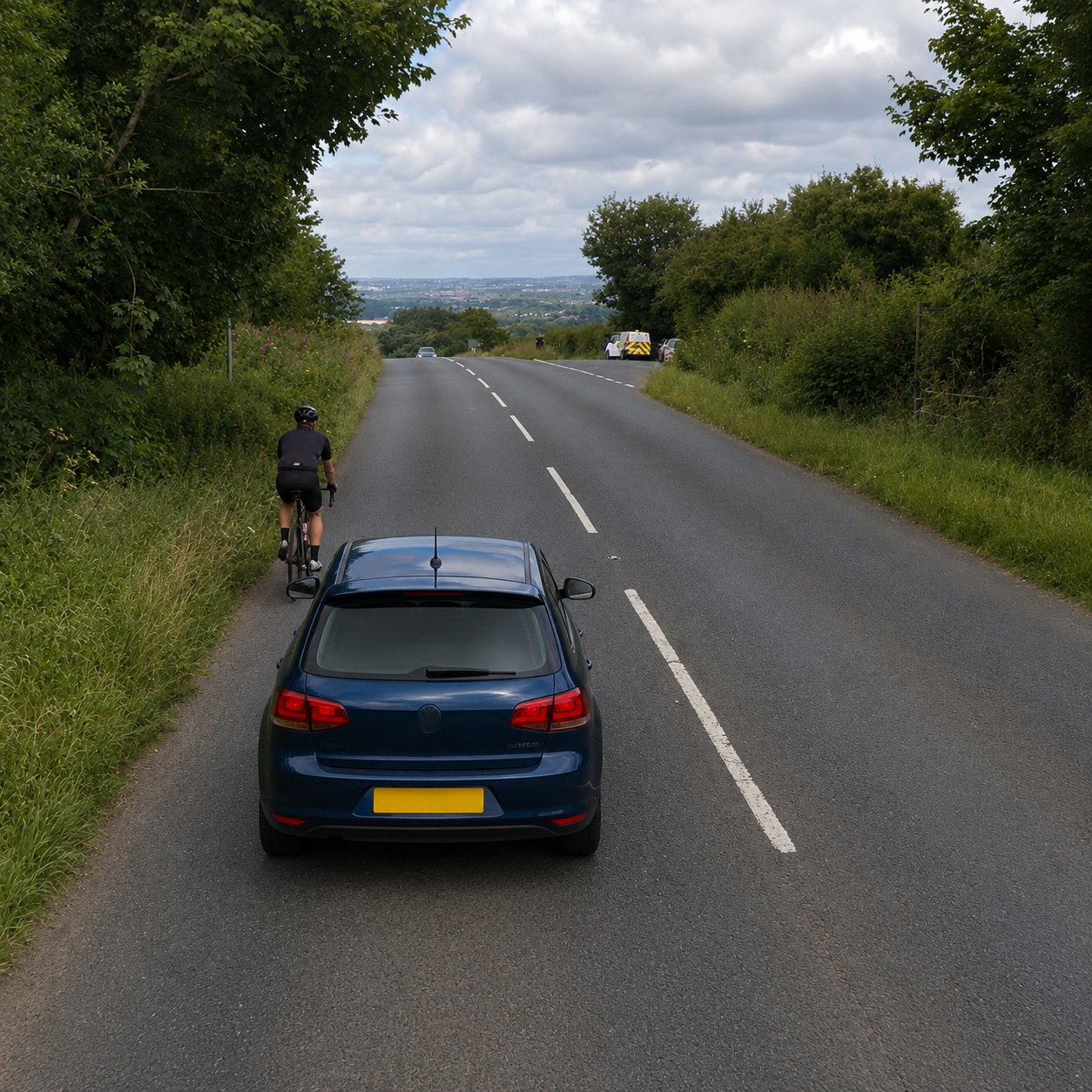 Avoid
Avoid
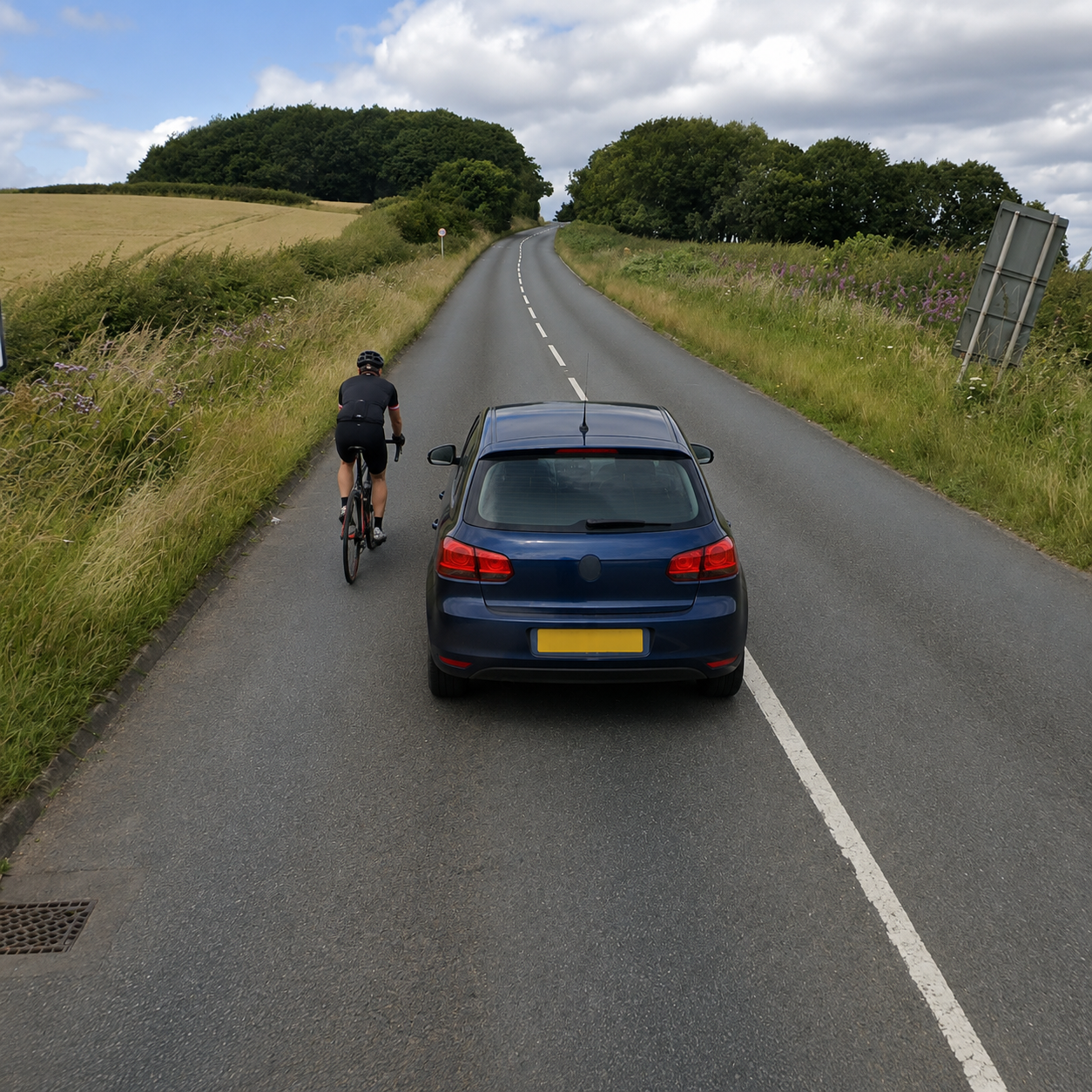 Avoid
Avoid
Read moreShow less
Highway Code
This lesson is a revision aid, not a replacement for The Highway Code.
Rule 163
Overtake only when it is safe and legal to do so. Leave at least 1.5 metres when overtaking cyclists at speeds of up to 30mph, and give them more space when overtaking at higher speeds - give motorcyclists, cyclists and horse riders at least as much room as you would when overtaking a car. Move back to the left as soon as you can but do not cut in.
Read on GOV.UKRule 162
Before overtaking, make sure the road is sufficiently clear ahead, no one has started to overtake you, and there's a suitable gap in front of the road user you plan to overtake.
Read on GOV.UKRead moreShow less
More in Overtaking a cyclist
Waiting until the road ahead is clear
A cyclist that stays ahead through a roundabout, roadworks, and a pinch point isn't several separate hazards to get pas…
Choosing not to overtake
Not every cyclist has to be overtaken - if there's no safe space and your own route is about to take you elsewhere, sta…