This video has no narration.
Observation and communication
Spotting a stopped bus early and moving over in good time
Read the full lessonPractical test
Why it matters
Failing to plan around a stationary hazard like a bus, and having to react late, is exactly the kind of fault this skill is designed to prevent.
What to look out for
Spot it early, plan early
The whole point is time: seeing the bus far enough ahead means one smooth, checked move over - not a late brake and a rushed lane change.
The bus is still a hazard as you pass
Watch for it signalling to pull away and for people stepping out around it. Low speed as you pass gives you time to react to either.
Key steps
- 1 Scan well ahead on the approach so you spot a stationary vehicle, like a bus, as early as possible.
- 2 Once you've identified the hazard, check your mirrors and blind spot in good time, well before you reach it.
- 3 Decide early whether the other lane is clear enough to move over, rather than waiting until you're close behind the bus.
- 4 Signal if needed and move over smoothly, without forcing anyone in the other lane to slow or change course, keeping a safe gap as you pass.
- 5 Treat the bus as a live hazard, not just an obstacle: it may signal to pull away, and people can step out in front of or behind it - keep your speed down as you pass, and give priority if it's pulling out and you can do so safely.
Read moreShow less
Common mistakes
Noticing the hazard late
Build early scanning into your routine so stationary vehicles are spotted well before you reach them, not just when you're already slowing down.
Moving over without checking mirrors and blind spot first
Even when you've planned early, always confirm the other lane is clear immediately before you move - and don't make anyone already there slow or swerve for you.
Forgetting the bus itself is a hazard
A stopped bus can pull away, and pedestrians can step out around it. Keep your speed down as you pass, and be ready to give priority if it signals to move off.
Read moreShow less
Example scenarios
Illustrative, AI-generated examples - not real photographs.
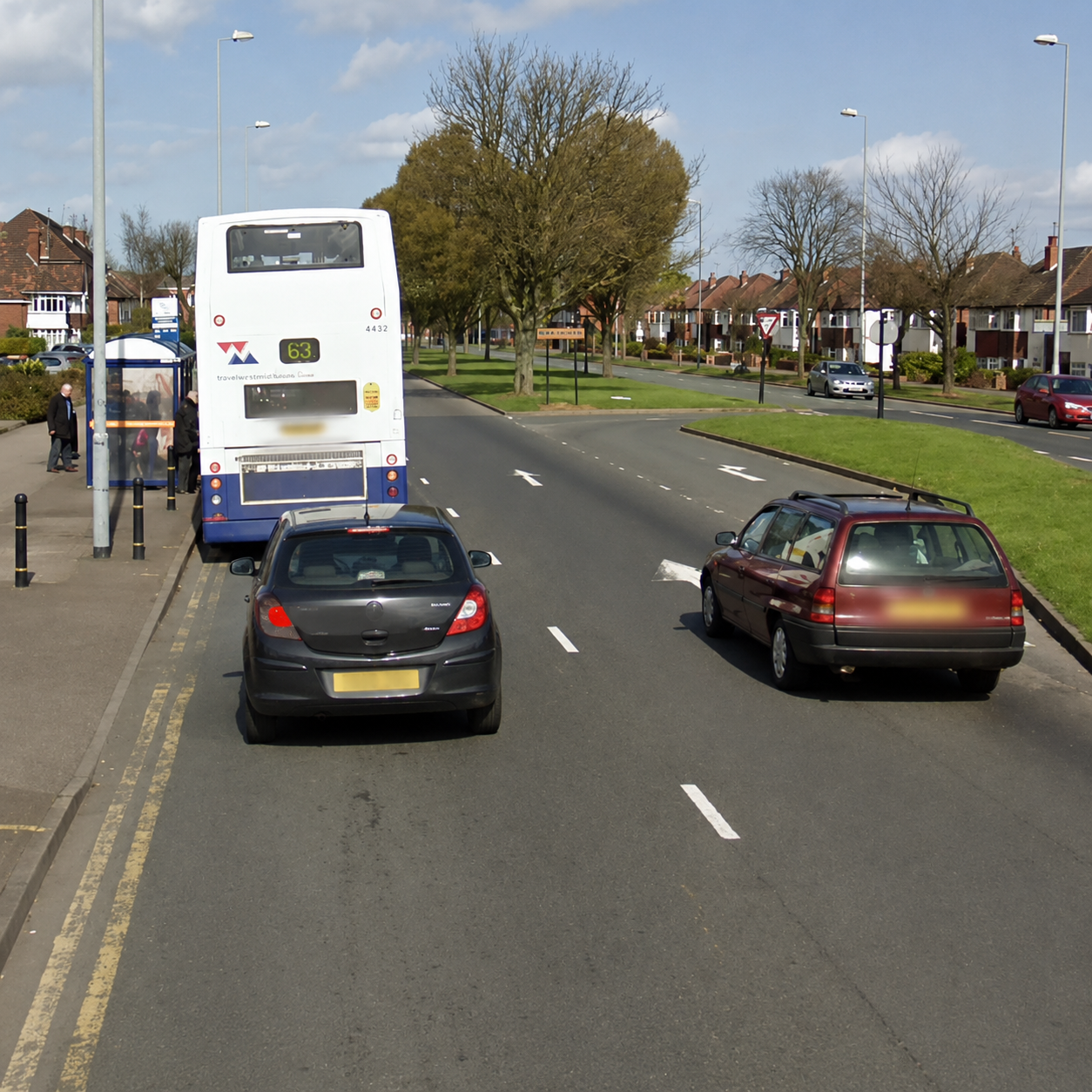 Avoid
Avoid
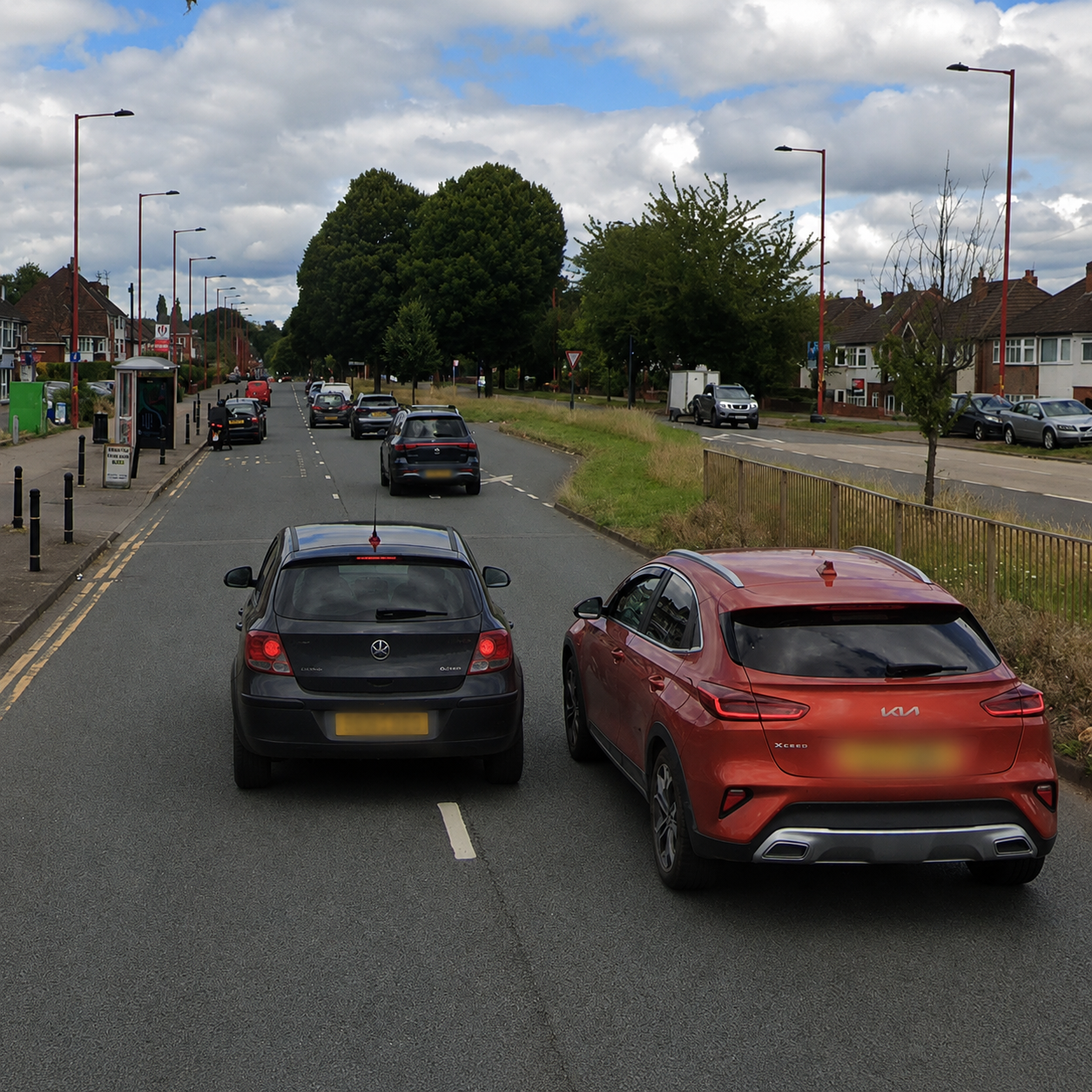 Avoid
Avoid
Read moreShow less
Highway Code
This lesson is a revision aid, not a replacement for The Highway Code.
Rule 133
Before changing lane, use your mirrors and if necessary take a quick sideways glance, so you don't force another road user to change speed or course.
Read on GOV.UKRule 223
Give priority to buses, coaches and trams when you can do so safely, especially when they signal to pull away from a stop, and watch for people getting on or off.
Read on GOV.UK