 Driving Mastery
Driving test manoeuvres
How to do bay parking on your driving test
Both bay parking exercises a DVSA examiner can ask for, what they are actually watching, and how to fix the mistakes that cost most learners marks.
See the bay parking lessonsQuick answer
- Bay parking is one of three reversing exercises a DVSA examiner can ask for on the practical test.
- There are two versions: drive in and reverse out, or reverse in and drive out.
- The examiner tells you which one to do - you do not choose.
- You will not know in advance which reversing exercise you will be given, so practise all of them.
Bay parking, demonstrated
There are two bay parking exercises, not one
GOV.UK lists three reversing exercises for the car test: parallel parking at the side of the road, parking in a bay, and pulling up on the right before reversing about two car lengths and rejoining the traffic. The examiner asks for one of them.
Parking in a bay is itself two different exercises. You will either drive forward into the bay and reverse out, or reverse into the bay and drive out. The examiner will tell you which. Practising only one of them is the most common gap I see in learners who are otherwise ready for test.
Bay on your left, in three steps
-
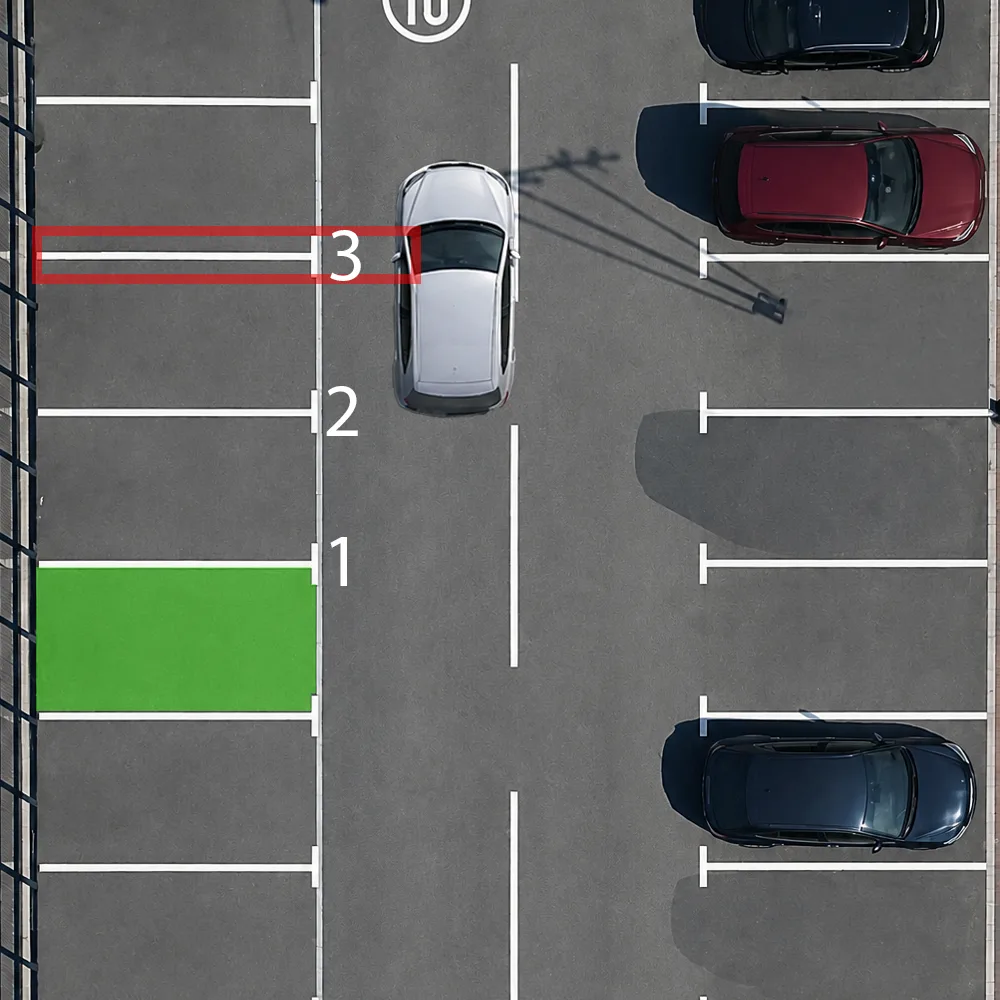
1 Count three lines past your bay. Your reference point is your wing mirror level with the third line.
-
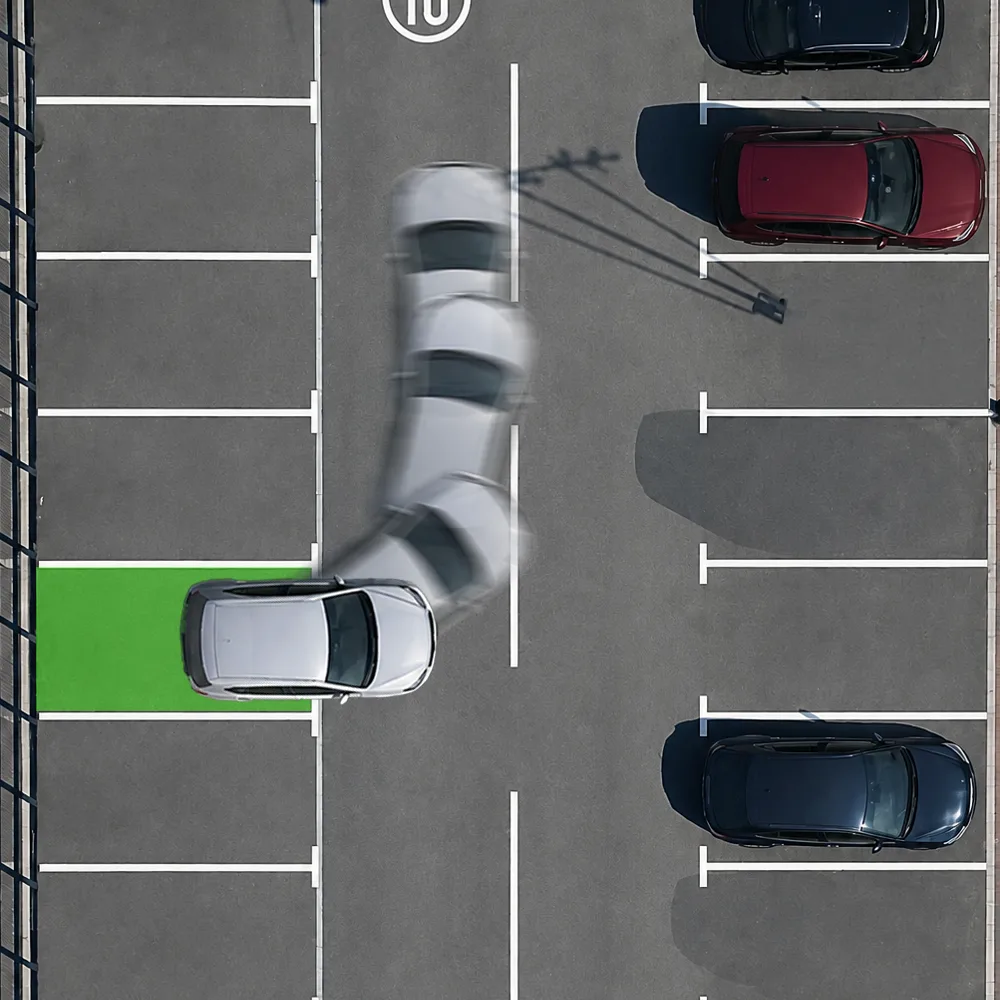
2 Full lock left, select reverse, and begin the manoeuvre.
-
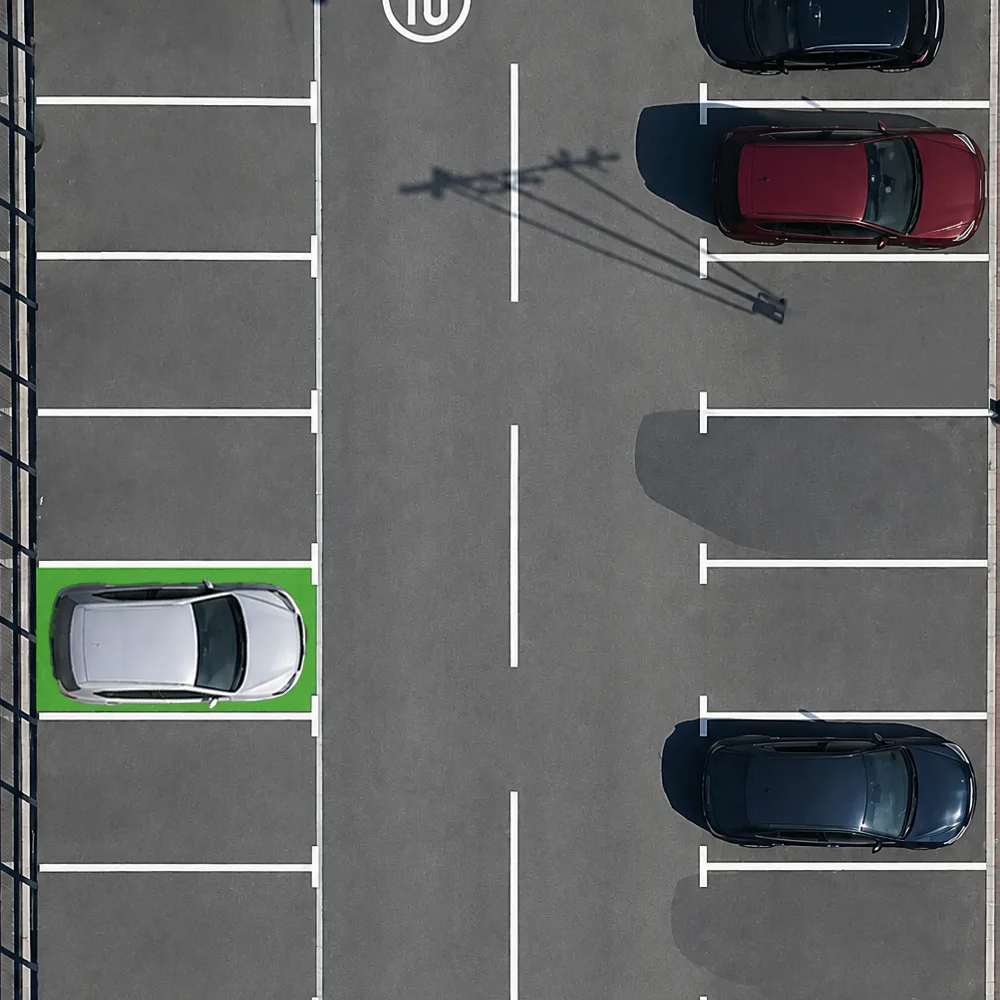
3 When the car comes straight, stop, straighten the wheels, and finish.
Bay on your right, in two steps
-
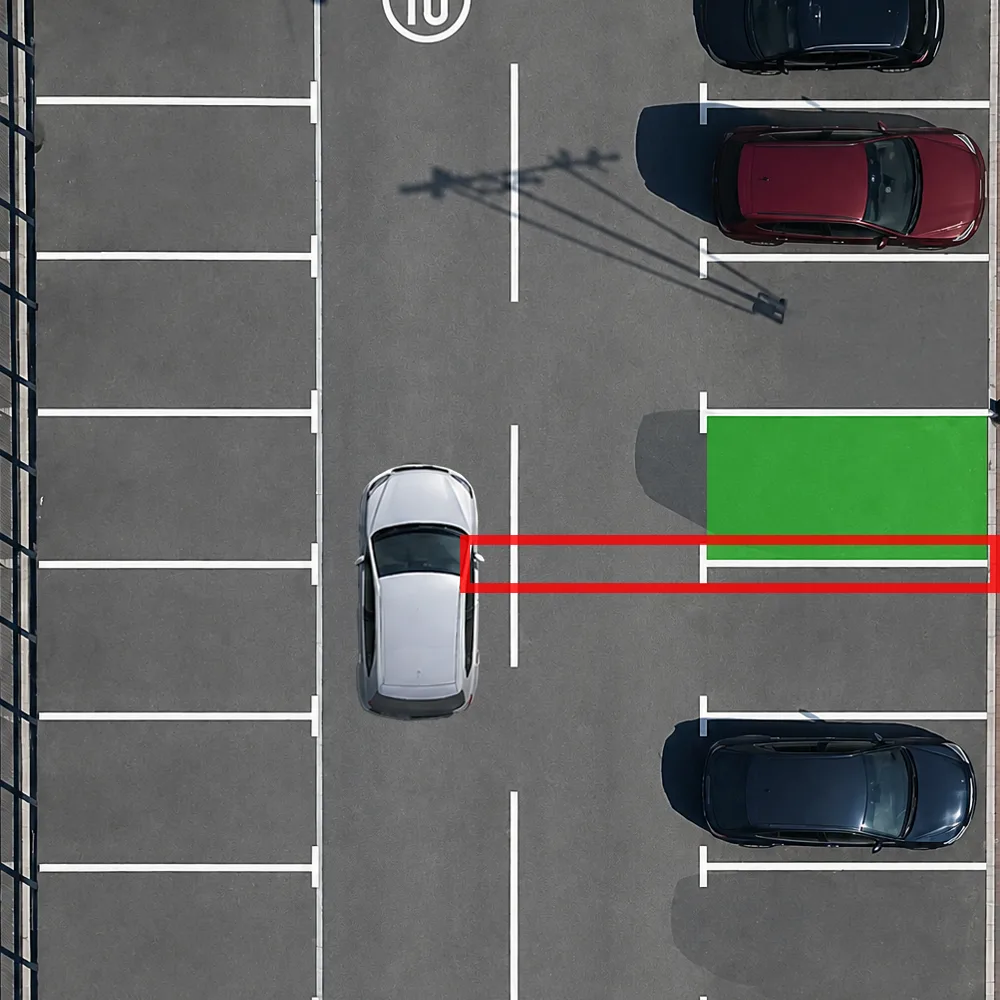
1 Stay on the left of the lane and line your driving-side wing mirror up with the bay marking.
-
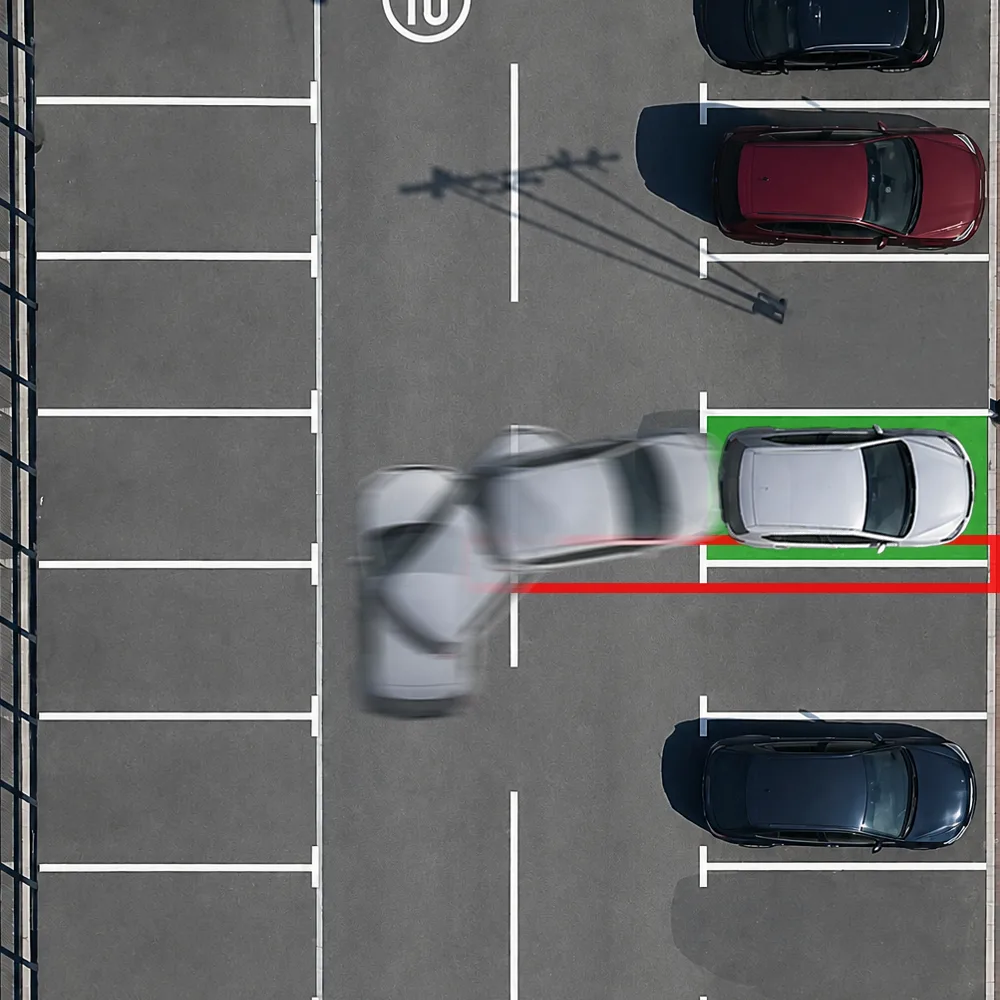
2 Full lock right and drive in. Once straight, stop, straighten the wheels, then finish.
The examiner is watching your observations, not your steering
A bay that ends up slightly off-centre is rarely what costs a learner the test. Reversing without proper all-round observation is. The moment the car starts moving backwards you are responsible for everything around it, including what walks into the space behind you after you have checked it.
Why reversing into the bay is usually easier
It feels harder, so learners avoid practising it. But reversing into a bay puts the difficult part - the tight, low-speed manoeuvring - where you can see it, and leaves you driving forwards into an open car park when you leave. Driving in and reversing out does the opposite: the easy part first, then reversing out across a lane other vehicles are using, with your view blocked on both sides by parked cars.
DVSA does not prescribe a method or reference points for either version, and no examiner will mark you on which technique you use. What matters is that the car ends up within the bay, under control, and that you looked properly throughout.
Related learning
Free video library
38 more driving lessons, filmed on real UK roads
Every junction type, roundabout and manoeuvre, filmed on the road rather than drawn. The written lessons and all 38 videos are open to everyone, with no account needed.
Browse the free Driving Skills libraryPart of a topic guide
Driving test manoeuvres
Part of Driving Mastery's manoeuvres guide, covering the reversing exercises and the emergency stop a DVSA examiner can ask for on the practical driving test.
Driving Mastery's learner guidance is written and reviewed by Niall Cullen, a UK approved driving instructor, so it stays practical, safe, and grounded in real driving lessons.